

T: +86-20-86973099
E: sales@xqglasses.com
E: sales@xqglasses.com
NO.3, Yongfu Road, Sandong Avenue West, Huadu District, Guangzhou City, Guangdong Province, China
Views: 0 Author: Site Editor Publish Time: 2025-12-17 Origin: Site


Winter sports enthusiasts know that having the right equipment is crucial for an optimal experience on the slopes. Among the most important pieces of gear are ski goggles. These not only protect your eyes from the harsh conditions but also enhance your vision and safety. Whether you're carving through fresh powder, navigating challenging terrains, or enjoying a leisurely run, the clarity and protection offered by the right ski goggles are essential. BangLong Sports Glasses, a leading manufacturer of high-performance ski goggles, specializes in providing products that are designed to withstand the toughest snow conditions and help you maximize your performance and safety.
In this article, we will discuss how to select the right ski goggles based on varying snow conditions. Understanding how different lens colors, features, and technology options can enhance your skiing experience is key to making an informed choice. Let’s dive into the factors that will help you choose the best ski goggles for your needs.
One of the most important factors when choosing ski goggles is the lens color. Lenses come in a wide variety of colors, each designed to optimize visibility under specific light conditions. Whether you're skiing on a sunny day, in flat light, or during night skiing, the right lens color will help you see more clearly and navigate the slopes safely.
When skiing or snowboarding on cloudy or overcast days, visibility can be poor, making it harder to distinguish changes in the terrain. For such conditions, yellow or amber lenses are ideal. These colors are designed to enhance contrast and provide more definition in low-light environments. They allow more light to pass through, which helps to brighten up dark conditions.
In addition, yellow and amber lenses help reduce glare from surrounding snow and ice, making it easier to spot obstacles like rocks or tree branches. Whether you're skiing in the morning fog or during a heavy snowstorm, yellow and amber lenses will make sure you have a clear view of the slope.
On sunny days, glare from the snow can make it difficult to see the terrain clearly. For bright, sunny conditions, ski goggles with darker lenses—such as gray, brown, or mirrored—are the best option. These lenses help reduce glare, allowing you to ski or snowboard more comfortably without straining your eyes.
Dark lenses block out excess light and ensure that your eyes don’t get overwhelmed by the brightness, especially on long runs under a clear sky. They also improve contrast, allowing you to better distinguish bumps, dips, and changes in the snow surface.
Night skiing requires the ability to see clearly in low-light conditions, but clear lenses offer the best option. They allow maximum light transmission while still offering protection from the wind, snow, and other elements. While clear lenses don’t filter out much light, they ensure that you can ski or snowboard safely during the evening or in shadowed areas.
Clear lenses also prevent snow from entering your eyes while offering the clarity needed to spot obstacles and navigate the slopes. They are the go-to choice for those who enjoy skiing after the sun sets.
For skiers and snowboarders who frequently face changing light conditions, photochromic lenses are a game-changer. These lenses automatically adjust to varying light conditions, becoming darker in bright sunlight and lighter in low-light environments. Photochromic lenses offer the convenience of not needing to switch between goggles for different conditions, making them ideal for those who ski on unpredictable or changing terrain.
The adaptability of photochromic lenses ensures optimal visibility regardless of whether you’re skiing in direct sunlight, overcast skies, or when the light begins to fade.
Skiing or snowboarding at high altitudes exposes your eyes to stronger UV radiation due to the thinner atmosphere. Additionally, the snow reflects sunlight, which increases UV exposure, making it essential to choose ski goggles with proper UV protection. Without the proper protection, prolonged exposure to UV rays can lead to eye damage, including conditions like snow blindness.
Our ski goggles come equipped with lenses that block 100% of UVA and UVB rays, providing maximum protection for your eyes. Unlike regular sunglasses, which may only protect the front of your eyes, ski goggles offer full coverage, preventing UV rays from entering from the sides and ensuring comprehensive protection. This is particularly important when skiing in high-altitude areas or on sunny days, where UV exposure is significantly higher.
By wearing ski goggles with proper UV protection, you can prevent eye strain, discomfort, and long-term damage while enjoying your time on the slopes.
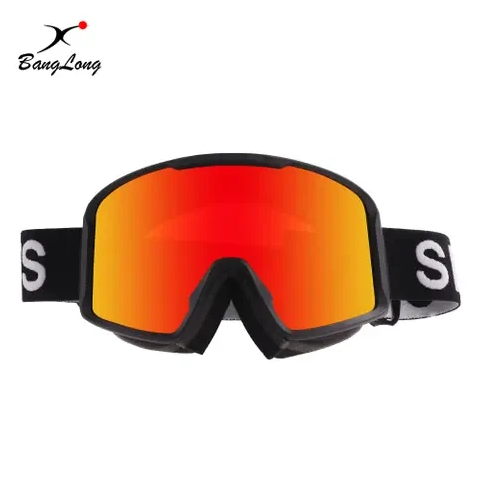
Fogging is one of the most frustrating issues skiers and snowboarders face, especially during intense activity or when moving between different temperature zones. Fogged-up goggles reduce visibility and can make skiing dangerous. That’s why anti-fog technology is a must-have feature in ski goggles.
When you're skiing, the warmth from your face can cause condensation inside your goggles. This happens especially when you’re exerting yourself or moving between cold and warm environments, such as entering a ski lodge from the cold outdoors. As moisture builds up on the lenses, your vision becomes obstructed, and you’re forced to slow down or stop.
To prevent this issue, our ski goggles are equipped with advanced anti-fog coatings and ventilation designs. The double-lens system helps insulate the goggles, reducing the difference in temperature between the inside and outside. This minimizes condensation, keeping your lenses clear throughout your ski run.
Furthermore, the ventilation systems incorporated in ski goggles allow air to circulate freely around the lenses, ensuring they remain fog-free even in humid, snowy conditions. The combination of these technologies ensures you can focus on the slopes without having to deal with fogged-up goggles.
The fit of your ski goggles is also crucial for preventing fogging. Properly fitted goggles ensure that there’s no gap between the goggles and your face, preventing warm air from escaping and cooling down. The separation between the inner and outer lenses helps further minimize the chance of fog buildup by maintaining optimal airflow around the lenses.
Different types of snow and terrain require different features in your ski goggles. Whether you're skiing through deep powder, on icy slopes, or in mixed conditions, selecting the right goggles can enhance your visibility and safety.
When skiing in deep powder snow, wide lenses are a must. They provide a broader field of vision, which allows you to spot obstacles like rocks or trees buried in the snow. Wide lenses also help you see the terrain more clearly, even when it's completely covered in fresh snow.
For powder skiing, you’ll want ski goggles with lenses that enhance depth perception, making it easier to judge the distance and contours of the snow.
In icy or mixed terrain, contrast is critical for seeing clearly. High-contrast lenses enhance the difference between the snow and any hidden ice patches, which can be hard to spot with regular lenses. Lenses in shades of yellow, amber, or rose are ideal for this purpose, as they increase the visibility of icy or uneven surfaces.
Whether you’re skiing on packed snow or navigating through icy patches, high-contrast lenses help you stay focused on the terrain and avoid potential hazards.
Choosing the right ski goggles for varying snow conditions is essential for a safe and enjoyable skiing or snowboarding experience. Whether you’re skiing in bright sunlight, low light, or at night, the right lens color and features will help you see more clearly, reduce glare, and protect your eyes from harmful UV rays.
BangLong Sports Glasses offers a wide range of ski goggles that are designed to meet the needs of every skier and snowboarder, no matter the conditions. Our goggles provide superior UV protection, anti-fog technology, and lenses suited for all types of terrain. Contact us today to find the perfect pair of ski goggles for your next winter adventure.
1. Why are UV protection and glare reduction important for skiing?
UV protection helps prevent eye damage from prolonged exposure to the sun, especially in high-altitude and snowy environments where UV rays are intensified. Glare reduction allows you to ski or snowboard without straining your eyes.
2. How do photochromic lenses work in ski goggles?
Photochromic lenses automatically adjust to changing light conditions, becoming darker in bright sunlight and lighter in low-light environments. This feature makes them versatile for various skiing conditions.
3. How can I prevent fogging in my ski goggles?
Our ski goggles feature anti-fog coatings, double-lens construction, and ventilation systems that help reduce condensation, keeping your lenses fog-free throughout your run.
4. What type of ski goggles should I choose for skiing in icy conditions?
For icy terrain, high-contrast lenses in shades like yellow, amber, or rose are ideal for enhancing depth perception and making it easier to spot ice and obstacles.


