

T: +86-20-86973099
E: sales@xqglasses.com
E: sales@xqglasses.com
NO.3, Yongfu Road, Sandong Avenue West, Huadu District, Guangzhou City, Guangdong Province, China
Views: 0 Author: Site Editor Publish Time: 2026-09-09 Origin: Site


Wet, heavy snow presents the ultimate stress test for optical winter gear. While most lenses perform adequately in dry, cold powder, high-moisture environments quickly expose the flaws in cheap manufacturing. Buyers evaluating premium ski goggles must look past marketing buzzwords. You need to understand the baseline physics of thermal barriers, hydrophobic coatings, and light transmission to make an informed investment. Internal fogging and external slush accumulation create dangerous blind spots during high-speed descents. This guide breaks down the structural and chemical technologies preventing fog and moisture buildup. We offer a transparent framework for selecting snow-ready optics. You will learn exactly how dual-lens construction, specific geometry, and specialized factory coatings protect your vision in the harshest winter storms. Investing in the right gear often means the difference between a thrilling ride and a hazardous struggle down the mountain.
Thermal Isolation is Mandatory: Clear vision relies on a dual-lens construction that separates body heat from external freezing moisture.
Geometry Matters: Curved lens shapes actively shed heavy, wet snow better than flat profiles.
Chemical Defense vs. User Error: Factory-applied hydrophobic (outer) and hydrophilic (inner) coatings will fail if improperly wiped in the field.
Flat Light Amplification: Wet snow conditions dictate specific Visible Light Transmission (VLT) percentages and contrast-enhancing tints, not just basic tinting.
Understanding lens failure requires looking at the moisture-temperature gradient. Fogging is a simple matter of physics. Hot, humid air radiates from your face during physical exertion. This warm air travels upward and meets the cold, moisture-saturated external lens. Rapid condensation occurs instantly. A single-layer piece of plastic cannot buffer this extreme temperature difference. It allows the inner surface to reach the dew point in seconds, turning vapor into blinding droplets.
Surface tension complicates this process further. Dry powder usually bounces off optical surfaces. Wet snow, sleet, and slush behave differently. These heavy forms of precipitation possess high water content. They adhere stubbornly to plastic surfaces. When wet snow sticks to the outer frame, it blocks vital ventilation ports. The trapped moisture then freezes over your direct field of view.
This physical accumulation poses a severe visibility threat. The combination of external snow buildup and internal fogging creates dangerous blind spots. You lose the ability to judge terrain depth. Skiing at high speeds under these conditions turns minor bumps into major hazards. Reliable optics must physically block moisture while maintaining a stable internal microclimate.
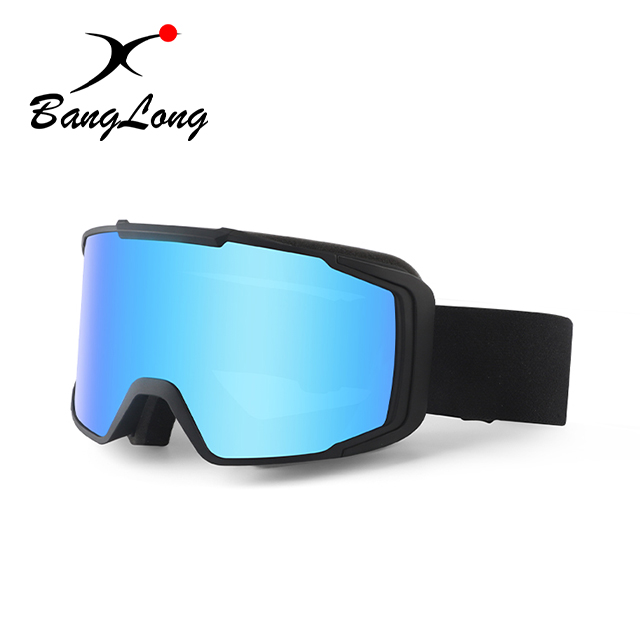
Manufacturers combat moisture using dual-pane thermal bridging. This structural design mirrors double-glazed windows in modern homes. A dense, sealed pocket of air sits between two distinct lenses. This air gap acts as superior insulation. It prevents the inner lens from dropping to the outside freezing temperature. Consequently, your body heat never triggers condensation.
Chemical treatments provide the second line of defense. Premium optics utilize opposing chemical strategies on the inner and outer surfaces:
Outer Lens (Hydrophobic): This factory treatment repels water at a molecular level. It increases the contact angle of water droplets. Rain and wet snow bead up instantly. The aerodynamic force of skiing then rolls the moisture off the surface.
Inner Lens (Hydrophilic): This coating actively absorbs micro-moisture. It acts like a microscopic sponge. It pulls vapor into the chemical layer before droplets can form. This prevents visual fogging.
Ventilation systems determine how well these coatings survive. Top-tier optics feature armored and mechanical ventilation. Standard spongy, open-cell foam absorbs wet snow easily. This wet foam eventually freezes solid, suffocating the airflow. Premium models solve this by utilizing armored or heavily hydrophobic vent meshes. These robust structures maintain critical airflow even when plastered in heavy slush.
Lens geometry dictates surface area and water shedding capabilities. This is why spherical ski goggles dominate in heavy precipitation. These lenses curve on both the X and Y axis, creating a distinct bubble shape. This bulbous profile provides a naturally steep angle. Gravity and wind resistance work together to pull heavy slush down and off the lens quickly.
Optical distortion mitigation is another massive advantage. Flat or cylindrical lenses often warp peripheral vision. When water pools on flat edges, it bends incoming light uncomfortably. Spherical profiles mimic the natural curvature of the human eye. They maintain 1:1 optical clarity. You can view the terrain through scattered water droplets without experiencing nausea or spatial distortion.
Furthermore, spherical shapes offer superior internal volume. The drastic curve pushes the lens further away from your face. This increased distance creates a much larger internal air reservoir. A larger volume of trapped air dilutes the humidity coming from your breath. It significantly delays the onset of fog during heavy exertion.
Lens Geometry Comparison in High Moisture
Feature | Cylindrical Profile | Spherical Profile |
|---|---|---|
Water Shedding Ability | Moderate (Snow can pool on flatter edges) | Excellent (Steep curves force water off) |
Internal Air Volume | Lower (Sits closer to the face) | Higher (Delays fogging efficiently) |
Peripheral Clarity when Wet | Prone to mild edge distortion | Maintains 1:1 natural clarity |
Wet snow usually implies heavy cloud cover and storm cells. This environment creates the infamous "flat light" dilemma. Dense clouds diffuse sunlight evenly across the mountain. Shadows disappear entirely. Terrain definitions, dangerous bumps, and icy patches vanish into a sea of gray white. You need specific optics to survive these gray-out conditions.
Choosing the optimal VLT (Visible Light Transmission) is crucial for precipitation. We highly recommend High-VLT lenses ranging from 40% to 70%. Dark lenses will blind you in a storm. Instead, opt for rose, yellow, or amber tints. These specific colors filter out hazy blue light. They artificially boost contrast, forcing terrain shadows to pop out against the snow.
Despite heavy clouds, UV protection remains non-negotiable. Many skiers mistakenly believe dark clouds block harmful radiation. In reality, UV rays penetrate storm clouds easily. Wet snow acts as a massive mirror, reflecting UV radiation directly into your eyes. You must wear UV400 ski goggles at all times. Skipping this protection invites photokeratitis, commonly known as snow blindness.
We must also address the polarization myth in wet snow. Marketers frequently push polarized lenses as a premium upgrade. However, they present a distinct disadvantage in wet, icy conditions. Polarized filters block horizontal glare. On a snowy mountain, glare reflects off slick black ice. You need to see that glare to avoid falling. Removing it makes icy patches invisible and highly dangerous.
Implementation risks in the field run high. The quickest way to ruin an expensive piece of gear is improper handling during a storm. Wet snow frustrates skiers. They often react by scrubbing their lenses with a snowy glove. This single action destroys the carefully engineered chemical ecosystem we outlined earlier.
Instead, you must master the "Tap and Shake" method. When slush coats your field of view, follow these precise steps safely:
Pull the frame completely off your face.
Hold the plastic frame firmly by the edges.
Tap the sturdy plastic edge against your knee or a padded glove.
Shake the frame vigorously to dislodge loose water beads.
Place them back on your face immediately to seal the heat.
Understanding why wiping is destructive prevents costly mistakes. Your inner lens contains a delicate hydrophilic coating. When wet, this chemical layer softens. Wiping a wet inner lens smears the coating permanently. You will destroy the micro-sponge structure. This guarantees permanent fogging for the rest of the day, and often ruins the lens forever.
Magnetic quick-change systems offer the most pragmatic solution for wet days. Instead of battling a soaked lens, you simply swap it. Modern magnetic frames allow users to pop out a compromised, wet lens on the chairlift. You can snap a dry, fresh lens into place in under ten seconds without removing your gloves.
Building a reliable storm kit requires strict adherence to must-have criteria. Do not compromise on these three elements. First, verify a sealed dual-lens construction. Single lenses belong in the trash. Second, ensure the outer lens features a factory DWR (Durable Water Repellent) treatment. Third, confirm the package includes a high-contrast, low-light specific lens.
Once you secure the basics, look for nice-to-have features. Magnetic lens swapping drastically improves quality of life during a blizzard. Armored venting prevents ice blocks from forming over your airflow ports. These premium additions keep you on the slopes longer while others retreat to the lodge.
Finally, perform a rigorous helmet compatibility check. The best optics fail if they do not fit your helmet. You must eliminate the "gaper gap" between the top of the frame and the helmet brim. A seamless fit prevents melting snow and rain from dripping directly into the top vents. Blocked top vents trap hot air and guarantee immediate fogging.
Clear vision in wet snow isn't magic. It relies on a precise combination of thermal insulation, specific chemical coatings, and correct user maintenance. You now understand the physics behind fogging and the structural defenses required to beat it. Upgrading to curved geometries and contrast-enhancing tints gives you a massive advantage in severe weather.
Audit your current winter gear before your next trip. Check the edges for foam deterioration and lens delamination. Prioritize investing in a system offering robust anti-fog warranties and quick-change magnetic capabilities. Select a low-light lens tint suited specifically for your local mountain's storm conditions. Proper preparation keeps you skiing safely while the rest of the mountain struggles to see.
A: No. Aftermarket automotive sprays like Rain-X contain harsh chemicals. They will strip and destroy the factory-applied hydrophilic and hydrophobic coatings. Using these sprays permanently damages the lens surface and voids most manufacturer warranties.
A: Air dry them at room temperature. Place them in a well-ventilated area away from direct sunlight. Never use a hairdryer, radiator, or fireplace to speed up the process. Intense direct heat melts the thermal seal between the dual lenses.
A: This indicates the factory hydrophobic coating has worn off. Over time, UV exposure and micro-abrasions degrade this chemical layer. When water stops beading up and rolling off, it is time to replace the external lens.
A: No, but they require much more active airflow to clear moisture compared to spherical models. You must keep moving at a decent speed to force air through the vents. If you stop frequently in wet snow, they will fog faster.


