

T: +86-20-86973099
E: sales@xqglasses.com
E: sales@xqglasses.com
NO.3, Yongfu Road, Sandong Avenue West, Huadu District, Guangzhou City, Guangdong Province, China
Views: 0 Author: Site Editor Publish Time: 2026-09-30 Origin: Site


Restricted peripheral vision acts as a critical safety bottleneck on the track and trail. It severely delays your reaction times to approaching competitors and sudden terrain changes. A narrow viewing angle leaves you constantly vulnerable to unseen hazards. While oversized frames promise massive fields of view (FOV), they often create unintended fitment issues alongside your protective gear. You might experience helmet interference when the frame hits the chin bar. You could also face distracting optical distortion at the outer edges. This guide breaks down the exact field of view requirements you need for both competitive racing and casual riding. We will explore the vital trade-offs between different lens architectures. You will learn how to evaluate various models effectively. We aim to help you choose reliable gear without falling for unverified marketing claims.
Optimal peripheral vision in dirt bike goggles requires a balance between maximum frame width and the physical constraints of your helmet's eye-port.
Pre-curved (injected) lenses offer superior edge-to-edge optical clarity and reduced peripheral distortion compared to standard flat, die-cut lenses.
Upgrading to specialized optics, such as UV400 motocross goggles, protects against eye fatigue but requires careful evaluation of Visible Light Transmission (VLT) for your specific riding environment.
A "massive FOV" is useless if the frame pinches your nose or breaks the foam seal—helmet compatibility must dictate your final purchase decision.
Human vision naturally spans roughly 200 to 220 degrees horizontally. You rely heavily on this wide natural angle daily. It helps you perceive speed and monitor your surroundings instinctively. However, wearing traditional Dirt Bike Goggles usually restricts this baseline field of view significantly. Traditional designs typically reduce your horizontal range down to 120 or 160 degrees. The thick frame sits closely against your face. It physically blocks your extreme peripheral sightlines. This harsh reduction creates a dangerous tunneling effect. Tunnel vision impairs your spatial awareness heavily during intense off-road rides.
Wider peripheral vision directly correlates to faster hazard recognition. You spot flying roost from other bikes instantly. You notice deep ruts before they catch your front tire. Overtaking riders become visible much sooner in your side vision. These split-second recognitions save you from severe crashes regularly. Improved spatial awareness keeps you dominant on the track. You spend less time turning your head awkwardly. You keep your primary focus directed safely forward.
The current market pushes ultra-wide frames aggressively. Brands constantly promise massive fields of view. You must acknowledge this prominent market trend cautiously. The skeptical reality dictates caution here. Adding frame width only works up to a very specific physical threshold. Eventually, the helmet shell begins to block your view directly. A massive frame provides zero extra visibility if the helmet eye-port covers the outer lens edges. You simply end up carrying extra bulk. This bulk offers no actual visual benefit.
Buying the widest frame available without measuring the helmet opening first.
Assuming a larger lens automatically guarantees a wider peripheral viewing angle.
Ignoring how deeply the frame seats inside the helmet padding.
Failing to test head mobility after inserting oversized frames.
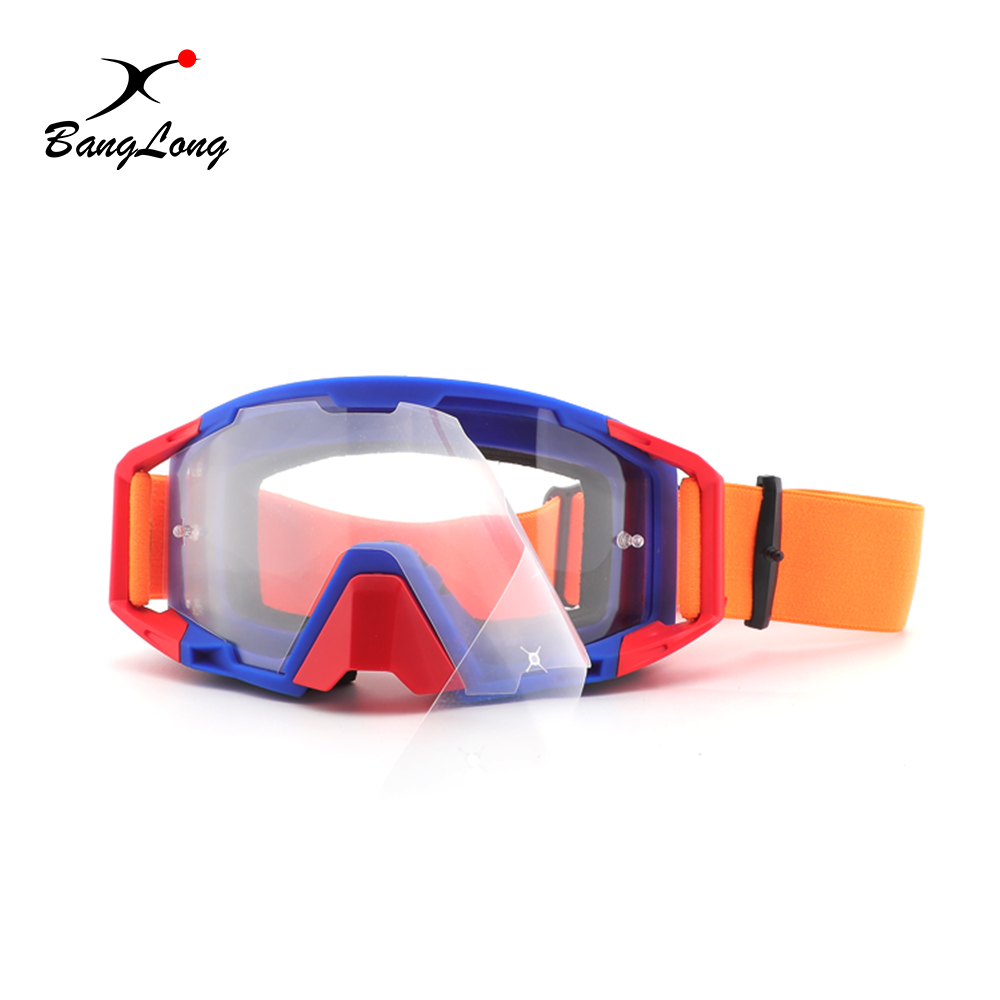
Standard flat lenses dominate the entry-level equipment market. Factories stamp them out directly from flat sheets of polycarbonate. This die-cut method keeps production expenses extremely low. They remain highly cost-effective for everyday consumers. You can find flat replacements easily at almost any trackside vendor. You can swap them quickly when scratched. However, flexing a flat lens into a curved frame causes severe light refraction. This physical bending stress creates micro-distortions in the extreme peripheral zones. Objects might appear slightly shifted or stretched at the outer edges. This distortion tires your eyes over time.
Manufacturers take a different approach for injected lenses. They mold pre-curved lenses perfectly inside heated machines. They match the exact physical curvature of the final frame design. This process eliminates all physical bending stress entirely. You experience zero optical bending at the outer lens edges. This precision guarantees highly accurate depth perception consistently. Your eyes relax considerably more during long, grueling rides. The downside involves elevated pricing. You pay a noticeably higher replacement cost per lens. They also feature a slightly thicker physical profile. This added thickness requires specific rigid frame designs.
We built a straightforward comparison to help guide your purchase. You must weigh these technical trade-offs carefully. Invest in pre-curved lenses for competitive racing environments. They also excel brilliantly in tight woods riding. Accurate depth perception saves you from hidden tree branches. Choose flat lenses for casual riding scenarios. They also suit high-turnover budget constraints perfectly.
Lens Architecture Decision Matrix
Feature Focus | Die-Cut (Flat) Lenses | Injected (Pre-Curved) Lenses |
|---|---|---|
Peripheral Distortion | Moderate to High at extreme edges. | Virtually Zero. True optical clarity. |
Depth Perception Accuracy | Acceptable for open tracks. | Superior for tight, technical trails. |
Replacement Cost | Highly affordable. Easy to stock up. | Expensive. Requires careful maintenance. |
Impact Resistance | Standard protection against roost. | Enhanced protection due to thicker profile. |
Ideal Use Case | Casual riding, budget racing, mud days. | Professional racing, high-speed desert runs. |
Implementation realities matter far more than theoretical optical specifications. The best optics on the market will fail completely. They fail entirely if they do not seat correctly inside the helmet eye-port. The frame must integrate seamlessly into the available helmet opening. It absolutely cannot push awkwardly against the hard helmet liner. Modern helmets feature varying shapes and interior foam densities. You must respect the eye-port constraint immediately.
If a frame runs too wide, the helmet pushes it downward violently. This constant downward pressure pinches your nasal airway severely. Restricted breathing destroys your physical endurance rapidly during a race. Furthermore, a forced fit lifts the face foam directly off your cheeks. A broken foam seal introduces blinding dirt and dust directly into your eyes. This safety hazard ruins your visibility completely. You cannot afford a broken seal in dusty environments.
We highly recommend performing the "foam compression test" always. Place the protective gear firmly on your head. The frame should rest gently on your bare face. The foam must compress evenly around your entire eye socket. You never want the frame wedged rigidly against the hard helmet shell. When pairing different brands of full-face motocross goggles and helmets, precise testing ensures a proper seal. Move your head vigorously side to side. The frame should stay planted securely on your skin. It should not shift independently when the helmet moves.
Always bring your specific helmet into the retail store.
Wear the gear for at least five minutes before judging comfort.
Breathe deeply through your nose to check for any airway pinching.
Look extreme left and right to verify the helmet shell does not intrude.
You must evaluate the true necessity of advanced eye fatigue prevention. True 100% UVA/UVB blocking matters deeply for your long-term vision. You must differentiate between basic color tinting and genuine UV blocking technology. Basic tints merely darken your view temporarily. They do not stop harmful radiation. Upgrading to UV400 motocross goggles prevents deep muscular eye fatigue. Long motos under harsh sunlight strain your sensitive eyes severely. Proper UV blocking keeps your vision sharp from the first lap to the final checkered flag. Riders need to evaluate Visible Light Transmission (VLT) constantly. You must match the VLT percentage to your specific riding environment perfectly.
Riders must also navigate tear-off versus roll-off FOV restrictions. Tear-offs maintain a wide FOV perfectly. The thin transparent film sits completely flush against the curved lens. However, they can cause severe optical glare. This glare happens if you stack too many layers incorrectly. Fine dust easily gets trapped between the loose sheets. This trapped dirt scatters incoming sunlight aggressively.
Roll-off systems function entirely differently. These systems feature mechanical side canisters. The bulky plastic canisters physically block 10 to 15 percent of your extreme peripheral vision. You literally lose sight at the far left and right edges. Buyers must weigh this permanent loss carefully. You trade some peripheral FOV for continuous clear vision in heavy mud. Evaluate your typical local track conditions before committing to either system.
Always check your helmet eye-port dimensions meticulously. Measure the internal width and height carefully using a soft tape. Do this before shopping for heavily marketed oversized frames. Knowing your exact physical limitations prevents costly purchasing mistakes. You avoid buying gear you cannot actually wear.
Determine your primary needs clearly next. Is your main goal achieving maximum peripheral vision? Do you need extreme impact resistance for navigating rocky trails? Are you seeking ultimate anti-fog capability for damp, humid conditions? Identifying your main priority filters out irrelevant products immediately. You focus only on gear matching your distinct riding style.
Look carefully for standardized safety ratings. Check the lens packaging for ANSI Z87.1 impact certification. This specific rating guarantees authentic structural protection against flying debris. Ignore vague marketing claims completely. Terms like "HD vision" or "ultra-clear" often mean nothing scientifically. Rely strictly on verified optical standards and trusted certifications.
Follow this structured approach to finalize your smart purchase:
Narrow your broad selection down to two or three specific models.
Prioritize an advanced outrigger frame design. Outriggers pull the rear strap evenly across your face. They preserve your FOV by maintaining a perfect, distortion-free foam seal.
Test your chosen motocross goggles alongside your specific helmet. Ensure they integrate flawlessly together before hitting the dirt.
Confirm the availability of replacement lenses for your final selection.
Maximizing your peripheral vision remains a strict exercise in fitment and optical clarity. You cannot achieve success by just buying the largest frame available blindly. A massive frame stuffed inside a small helmet destroys your view entirely. It creates dangerous blind spots and restricts your breathing. Focus instead on how the equipment integrates with your existing protective gear.
Balance modern pre-curved lens technology carefully. Pair it strictly with precise helmet eye-port compatibility. This careful integration yields the absolute highest return on your investment. Superior optics provide zero value if the frame hurts your face. Your safety and track performance depend heavily on clear, unobstructed sightlines. Choose wisely and prioritize proper testing.
A: Yes, they do indirectly. Outriggers improve the frame seal and seating depth significantly. By pulling the strap evenly against your face rather than stretching from the extreme sides, they prevent frame distortion. This balanced tension indirectly optimizes your viewing angle. It ensures a consistent, unobstructed peripheral range during aggressive riding.
A: We strongly advise against this crossover. Snow lenses lack proper ventilation for dusty dirt environments. They use dual-pane thermal lenses which might distort heavily under track conditions. Furthermore, they often lack tear-off posts. This absence makes them completely unsuitable for muddy motocross tracks, despite their wide frames.
A: Visible Light Transmission (VLT) dictates overall performance. Use clear or rose tints for wooded trails. These lighter tints enhance contrast in deep shadows. Choose mirrored or dark smoke tints for open tracks. These darker options significantly reduce harsh glare from direct overhead sunlight.
A: Yes, they typically can. OTG models require a much deeper frame design to clear prescription glasses safely. This extra physical depth pushes the main outer lens further away from your eye. Moving the lens outward slightly narrows your absolute peripheral angle. You trade some extreme side vision for necessary prescription compatibility.


