

T: +86-20-86973099
E: sales@xqglasses.com
E: sales@xqglasses.com
NO.3, Yongfu Road, Sandong Avenue West, Huadu District, Guangzhou City, Guangdong Province, China
Views: 0 Author: Site Editor Publish Time: 2026-08-13 Origin: Site


Most runners know the sudden discomfort of blinding sunlight breaking over a hill. Wind batters your eyes during a fast descent. You might think squinting and watering eyes are merely minor annoyances. In reality, they act as massive physiological drains on your energy. They steal the vital focus you need for the challenging miles ahead. We often view sports eyewear as a pure style accessory. However, this is a flawed perspective. Proper eye protection serves as essential technical gear. It holds the exact same importance as a properly fitted pair of running shoes. When you protect your eyes, you actively preserve your core energy. You also safeguard your long-term ocular health against harsh environmental elements. This article breaks down the specific features impacting athletic performance. We will explore frame materials, lens technologies, and critical fit mechanics. You will gain a clear, actionable framework for evaluating and selecting the absolute right pair for your training needs.
Squinting creates facial tension that transfers to the neck and shoulders, negatively impacting running economy.
True running sunglasses prioritize bounce-free stability and moisture management over aesthetics.
Lens tints and VLT (Visible Light Transmission) directly influence depth perception on varied terrains.
Choosing the right frame style—such as rimless designs—eliminates visual blind spots and reduces weight.
Runners obsess over lactate thresholds and stride cadence. Yet, many overlook the kinetic chain reaction triggered by their eyes. Your eyes consume a massive amount of sensory energy. When you optimize your visual environment, you directly improve your physical running economy.
Squinting seems like a harmless reflex. It actually triggers a destructive kinetic chain reaction throughout your upper body. When harsh sunlight hits your unprotected eyes, your facial muscles contract involuntarily. You engage the orbicularis oculi muscles constantly. This repetitive flexing causes localized facial fatigue.
Facial fatigue rarely stays confined to your face. The tension travels rapidly down your jawline. It then tightens your neck muscles. Finally, it locks up your shoulders and upper back. Tight shoulders restrict your natural arm swing. A restricted arm swing compromises your breathing mechanics. Your chest cavity cannot fully expand. As a result, your oxygen intake drops. You burn unnecessary energy fighting your own muscle tension. Relaxing your face allows your entire upper body to stay loose and efficient.
Running exposes you to unpredictable environmental variables. A rogue tree branch on a single-track trail can cause immediate corneal abrasion. High winds blow dust and fine grit into your eyes. You also encounter swarms of insects during humid morning runs.
Trail Runners: Face low-hanging branches, kicked-up gravel, and sudden transitions between light and dark forests.
Road Runners: Battle exhaust particulates, road grit thrown by passing cars, and relentless headwinds.
Track Athletes: Deal with blowing sand from long jump pits and harsh stadium glare.
Shatterproof polycarbonate lenses act as a physical shield. They deflect high-velocity impacts safely. You can maintain your pace confidently. You no longer need to dodge, flinch, or shut your eyes when running through debris-heavy zones.
Long-term sun exposure damages delicate ocular tissues. Runners spend hours outside during peak UV index times. This prolonged exposure dramatically increases your risk of developing pterygium. Eye care professionals often call this condition "surfer's eye." It is a benign, fleshy growth on the conjunctiva. Over time, it can grow over the cornea and obscure your vision.
UV radiation also accelerates cataract formation. Cataracts cloud the natural lens inside your eye. To prevent these conditions, you must wear UV400 Running Sunglasses during daytime efforts. UV400 lenses block 99 to 100% of harmful UVA and UVB rays. They filter out light rays up to 400 nanometers in length. This standardized protection ensures your retinas remain safe during grueling marathon training blocks.
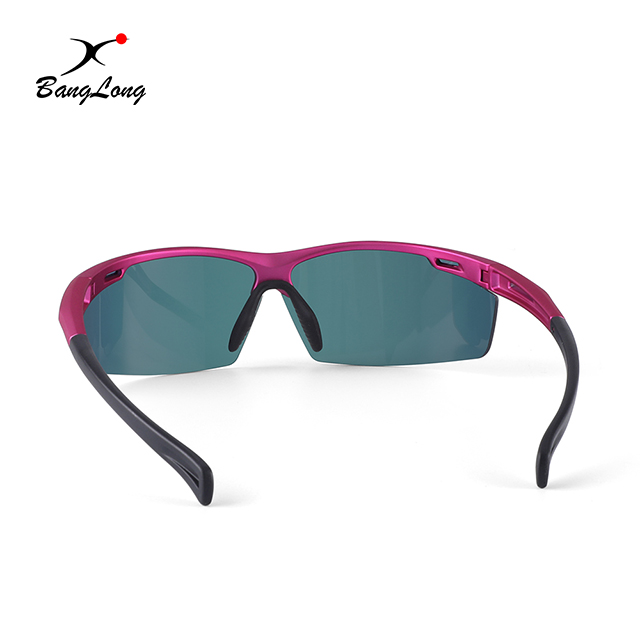
Performance eyewear differs significantly from casual fashion frames. Casual frames rely on heavy acetate and rigid hinges. Performance frames utilize space-age polymers and advanced rubber compounds. You must evaluate any potential purchase against three core metrics: weight, grip, and stability.
Every single gram matters over long distances. A standard pair of fashion sunglasses might weigh 45 grams. This sounds light on paper. However, the continuous impact of running multiplies that weight. Every time your foot strikes the ground, gravity pulls the frames downward. Heavy frames repeatedly hammer against the bridge of your nose.
Over a two-hour run, this constant micro-impact causes severe bruising and tenderness. Lightweight Running Sunglasses typically weigh between 20 and 30 grams. Manufacturers achieve this by using Grilamid TR90. This memory plastic is incredibly light. It also flexes under pressure without snapping. You barely feel a 25-gram frame on your face. This prevents nose-bridge fatigue entirely.
Standard plastic frames slip down your nose the moment you start sweating. You end up pushing them back into place every quarter mile. This breaks your concentration. It also ruins your arm drive rhythm. Performance eyewear solves this using hydrophilic rubber components.
Hydrophilic rubber behaves counterintuitively. Regular materials lose friction when wet. Hydrophilic rubber actively absorbs moisture. It increases its surface friction as you sweat. The more you perspire, the tighter the frames grip your skin. Look for generous hydrophilic rubber inserts on the nose pads. Also, ensure the temple tips feature this material. This dual-point grip system anchors the glasses firmly to your head.
You cannot compromise on stability. You must perform a rigorous "bounce test" before finalizing a purchase. Put the glasses on. Shake your head rapidly up and down. Mimic the vertical oscillation of a hard sprint. The frames should remain entirely stationary.
A proper fit distributes clamping pressure evenly along the sides of your head. The frames should never squeeze the temporal bone directly behind your ears. Excessive temporal pressure restricts blood flow. It causes throbbing tension headaches within thirty minutes. You want a secure, wrapping embrace. You do not want a vice grip. Adjustability matters here. Many premium frames offer bendable wire cores inside the rubber nose pads. This allows you to customize the bridge width perfectly.
The shape of your frame dictates how much of the world you can see. Runners rely heavily on peripheral vision and proprioception. Your brain needs uninterrupted visual cues to place your feet safely. Frame architecture falls into three primary categories.
Full-frame designs encircle the entire lens in plastic. They offer maximum durability. If you drop them on asphalt, the frame takes the impact. The lens remains pristine. However, full frames add extra weight. They also trap heat near the cheeks.
Half-frame designs leave the bottom edge of the lens exposed. They shed unnecessary grams. More importantly, they improve lower ventilation. Fresh air flows up under the lens edge. This constant airflow prevents condensation buildup on steep climbs.
For ultimate visual clarity, runners increasingly turn to Rimless Running Sunglasses. These frames lack a solid border around the lens. They provide a completely unobstructed lower and peripheral field of view.
This design is critical for technical trail runners. You must constantly scan the ground for hidden roots and loose rocks. Urban runners face similar challenges. You must dodge uneven curbs, potholes, and debris. A thick plastic rim creates a visual blind spot. Rimless designs eliminate this barrier. You can track obstacles seamlessly without constantly dipping your chin. This keeps your posture upright and your airways open.
Coverage depends on the base curve of the lens. The base curve measures the curvature of the frame. A base curve of 4 is relatively flat, like a casual wayfarer. A base curve of 8 curves deeply around the sides of your face.
Runners need a high base curve. Wrap-around styles minimize light leaking in from the sides. They stop harsh glare from bouncing off adjacent buildings into the corner of your eye. Deep wrap designs also act as a superior windbreak. They prevent high-speed air from drying out your contact lenses during fast descents.
Frame fit handles comfort. Lens technology handles optical performance. Selecting the right lens requires understanding your typical running environment. You must balance light transmission with color contrast.
VLT measures the exact percentage of ambient light passing through the lens. It dictates how dark the lens appears.
10% to 15% VLT: Ideal for exceptionally bright, cloudless days. Perfect for exposed marathon courses or alpine ridges.
20% to 30% VLT: Excellent for partly cloudy days or shifting conditions.
40% to 70% VLT: Crucial for overcast mornings, deep forest canopies, or twilight runs.
Choosing a lens too dark for your environment forces your pupils to dilate excessively. This strains your eyes and slows your reaction time.
Lens tint does more than look cool. It acts as an active color filter. Different tints manipulate specific light wavelengths to enhance contrast.
Lens Tint Color | Primary Running Environment | Specific Visual Benefit |
|---|---|---|
Rose / Copper / Brown | Wooded Trails, Dirt Paths | Boosts red and green contrast. Highlights subtle variations in dirt, roots, and mud. |
Grey / Black | Open Roads, Coastal Paths | Maintains true color perception. Dims overall brightness without distorting natural hues. |
Clear | Night Runs, Heavy Rain | Provides physical protection from wind and debris without reducing ambient light. |
Photochromic | Variable Weather, Dawn to Dusk | Automatically darkens in UV light. Adapts seamlessly as the sun rises or sets. |
Many runners assume polarized lenses represent the pinnacle of optical tech. This is a misconception. We must objectively weigh the pros and cons. Polarization filters out horizontal light waves. It excels at cutting blinding glare bouncing off open water or fresh snow.
However, polarization can flatten depth perception. It eliminates the subtle glare bouncing off wet surfaces. For a runner, this is dangerous. You rely on that subtle glare to spot wet leaves on a trail. You need it to identify a patch of black ice on winter asphalt. Non-polarized lenses often serve road and trail runners better. They preserve the three-dimensional texture of the ground.
Even premium gear fails if you choose the wrong specifications. Understanding common implementation risks saves you frustration and money. A quality pair of Running Sunglasses should seamlessly integrate with your existing gear.
Fogging stands as the most common runner complaint. It happens when cold outside air hits a lens warmed by your body heat. Condensation forms instantly. This usually occurs during high-exertion, low-airflow moments. You sprint hard, then suddenly stop at a city crosswalk. The airflow dies, and the lenses fog.
To mitigate this, look for factory-applied anti-fog coatings. These coatings use hydrophilic properties to force water droplets to flatten into an invisible film. Additionally, prioritize physical frame vents. Small cutouts at the top or sides of the lens allow heat to escape vertically. Mechanical ventilation always outlasts chemical coatings.
Pay close attention to how the frame sits on your unique facial structure. Frames should never sit completely flush against your cheeks. If they touch your cheekbones, two problems occur. First, they seal off the bottom airflow, guaranteeing fog. Second, they transfer facial sweat directly onto the inner lens surface. Smudged lenses ruin visual clarity instantly.
Similarly, ensure adequate eyelash clearance. Long eyelashes brushing against the inner lens is highly distracting. It also deposits natural skin oils onto the glass. Seek out adjustable nose pads. They allow you to push the frame two millimeters away from your face. This creates a perfect micro-climate of airflow.
Evaluate the geometry of the temple arms carefully. Many casual sunglasses feature heavily curved arms. These arms hook aggressively behind the ears. This works fine for walking. It fails miserably for running.
Curved arms interfere violently with running hats, visors, and cycling helmets. The hat pushes down on the curved arm, driving the nose piece into your face. Instead, look for straight temple arms. Straight arms slide smoothly straight back over your ears. They coexist peacefully with hat brims and helmet retention dials. They rely entirely on their rubber grip, not a mechanical hook, to stay secure.
Investing in technical eye protection transforms your running experience. You eliminate the cascading fatigue caused by squinting. You shield your vision from unpredictable hazards. You maintain a relaxed, efficient posture from the first mile to the last.
When shortlisting your options, always prioritize fit and coverage first. A bouncing frame ruins any run, regardless of how advanced the lens technology might be. Once you secure a stable fit, select a lens tint tailored to your primary running terrain.
Follow these actionable next steps to find your perfect pair:
Measure your face width: Use a ruler to find the hinge-to-hinge distance of your current favorite glasses. Match this measurement to manufacturer specs.
Utilize virtual try-on tools: Many brands offer AR apps. Use them to check cheekbone clearance and overall frame proportion.
Test them in action: If the return policy permits, take your new glasses on a short, sweaty run. Verify the grip technology and ventilation hold up under real physical exertion.
A: You can, but it invites several risks. Everyday sunglasses use heavier materials that bruise the nose bridge. They lack sweat-activated hydrophilic grip, causing them to slide constantly. They also feature poor ventilation, leading to rapid fogging. Most importantly, everyday lenses are rarely shatterproof, risking eye injury if you trip or hit a branch.
A: Not always. Polarized lenses excel at reducing glare near water or snow. However, they flatten depth perception. This filtering can hinder your ability to spot slippery surfaces, wet leaves, or black ice on asphalt. For uneven terrain, non-polarized high-contrast lenses are usually safer.
A: Start by choosing frames with built-in ventilation cutouts. Adjust the nose pads so the frames sit slightly off your cheekbones, allowing air to circulate behind the lens. Finally, regularly clean your lenses with specialized hydrophobic and anti-fog sprays to prevent moisture buildup during hard efforts.


