

T: +86-20-86973099
E: sales@xqglasses.com
E: sales@xqglasses.com
NO.3, Yongfu Road, Sandong Avenue West, Huadu District, Guangzhou City, Guangdong Province, China
Views: 0 Author: Site Editor Publish Time: 2026-08-10 Origin: Site


Many runners treat lens color as a simple aesthetic choice. You might just grab the sharpest looking shades and hit the pavement. However, this stylistic focus ignores a vital performance factor. Lens tint directly dictates your contrast sensitivity, depth perception, and eye fatigue during a run.
Choosing the wrong tint limits terrain visibility significantly. It easily hides roots on a technical trail. It also fails to prevent squinting on highly reflective roads. This constant visual strain often causes severe tension headaches. We need a smarter, more deliberate approach to our eyewear.
This article provides an evidence-based framework to evaluate different optics. You will learn about Visible Light Transmission (VLT) and specific color profiles. We also explore advanced technological coatings. Our goal is straightforward. We want you to confidently select the exact optic profile for your daily routes. Better vision ensures safer, faster, and much more comfortable miles.
Context is King: The best tint depends entirely on your environment—gray for bright roads, amber/rose for trails, and clear/yellow for low light.
VLT Drives Performance: Visible Light Transmission percentage dictates how much light reaches the eye; match this metric to your typical running weather.
Contrast Over Dimming: For uneven terrain, enhancing contrast (via copper or rose lenses) is safer and more effective than simply darkening the environment.
Tech Has Trade-offs: Photochromic and mirrored lenses offer distinct environmental advantages but come with specific performance limitations you must evaluate before purchasing.
Brands constantly invent confusing marketing names for their proprietary lens tints. You should ignore these buzzwords. Instead, focus on the objective baseline for evaluating any eyewear: Visible Light Transmission (VLT). VLT measures the exact percentage of ambient light passing through the lens to reach your eye.
Lower VLT percentages mean darker lenses. Higher VLT percentages indicate lighter lenses. Understanding this scale removes the guesswork from your buying process. You simply match the transmission level to your local weather patterns. We divide VLT into four universal categories.
These are clear or extremely light tints. You need this category for night running, heavy overcast days, or dense forest canopies. They do not block bright light. Instead, they provide essential physical protection. They shield your eyes from wind, dust, low-hanging branches, and insects.
This represents the medium tint range. It serves as the most versatile option for variable weather. If your runs feature shifting light conditions, Category 2 performs beautifully. You get enough dimming for scattered sunshine without going blind under cloud cover.
These are dark tints. Category 3 stands as the gold standard for bright, fully exposed conditions. If you do summer road running under cloudless skies, you need this transmission level. It drastically reduces eye fatigue by preventing you from squinting against harsh glare.
These lenses look nearly opaque. We do not recommend them for standard running environments. Manufacturers reserve Category 4 specifically for extreme high-altitude alpine zones or glacier environments. They can actually impair your vision in typical urban or trail settings.
VLT Category | Light Transmission (%) | Ideal Weather Conditions | Primary Running Application |
|---|---|---|---|
Category 0-1 | 80 - 100% | Night, Heavy Overcast, Fog | Physical eye protection (wind, bugs, debris) |
Category 2 | 18 - 45% | Partly Cloudy, Shifting Light | Versatile daily training, mixed environments |
Category 3 | 8 - 17% | Bright Sun, Cloudless Skies | Exposed road running, summer miles |
Category 4 | 3 - 8% | Extreme Glare, Snow/Ice | High-altitude alpine running only |
Expert Tip: Most runners buy lenses that are too dark. If you run early in the morning or navigate shaded trails, prioritize a Category 2 lens. It keeps your eye muscles relaxed without compromising your ability to spot uneven terrain.
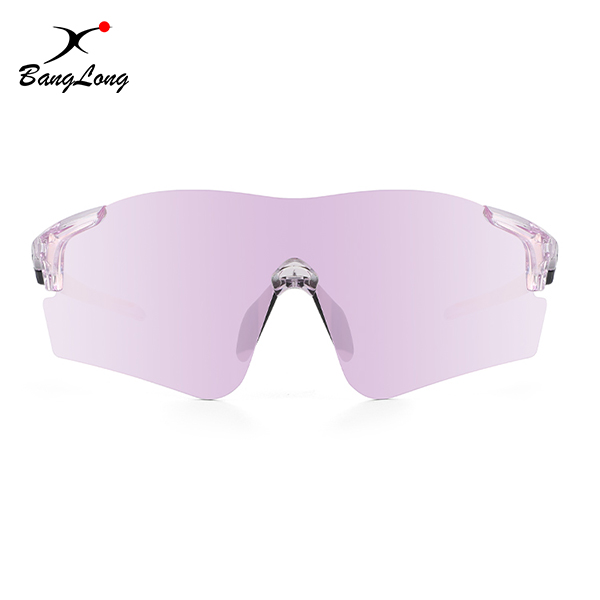
VLT determines how much light enters your eye. Base tint determines how that light gets processed. Different colors filter specific wavelengths of light. This filtering process alters your contrast sensitivity and depth perception. When evaluating Running Sunglasses, you must match the base tint directly to your typical running surface.
Mechanism: They reduce overall brightness equally across the color spectrum. They maintain 100% true color perception.
Best for: Exposed road running, track workouts, and consistently bright, cloudless days.
Limitations: They do not enhance contrast at all. They simply make the world look darker. Because of this, they are a poor choice for shaded trails where you need to spot subtle texture changes.
Mechanism: These warm tints filter out blue light waves. Blue light scatters easily and causes visual "noise." Filtering it sharpens your focus and heavily enhances visual contrast.
Best for: Trail running, varied terrain, and shifting light conditions.
Implementation Reality: These lenses make green and brown terrain "pop" visually. If you run on dirt, they allow faster identification of roots, rocks, and mud. They drastically improve your reaction time on technical descents.
Mechanism: They maximize depth perception. They provide incredible contrast against green landscapes and blue skies.
Best for: Overcast days, early morning miles, and highly technical trail running through dense vegetation.
Implementation Reality: Rose lenses soothe the eyes during long efforts. They excel when light is flat, pulling distinct shapes out of otherwise washed-out scenery.
Mechanism: Yellow tints drastically increase contrast in extremely flat, low-light conditions by absorbing almost all blue light.
Best for: Dawn, dusk, heavy fog, and severe cloud cover.
Implementation Reality: They make a gloomy morning look artificially sunny. However, they become overwhelming and uncomfortable if the sun suddenly breaks through the clouds.
Once you select your VLT and base tint, you can add technological coatings. These upgrades alter how the lens handles specific environmental challenges. However, every technology brings a distinct trade-off.
Mirrored Running Sunglasses feature a highly reflective coating applied to the outside of the lens. They function almost like a one-way mirror.
These coatings bounce intense, direct light away from your eye before it even reaches the base tint. They are ideal for runners facing severe glare from endless asphalt, open water, or snow. A solid mirror coating decreases the VLT by an additional 10 to 15%. Crucially, it does this without altering the base tint’s color profile. You get extra brightness protection while maintaining your desired contrast.
Many people confuse mirrored lenses and reflective lenses. Reflective Running Sunglasses utilize anti-reflective (AR) coatings. Manufacturers apply these coatings to the back side of the lens.
Why does the back matter? Wrap-around frames sometimes allow sunlight to sneak in from the sides or behind your head. This light hits the inside of the lens and bounces directly into your pupil. Backside AR coatings absorb this bounce-back light. They eliminate annoying interior reflections, ensuring your vision remains perfectly clear.
Photochromic Running Sunglasses feature intelligent lenses. They transition from clear to dark automatically based on ambient UV exposure. As sunlight increases, chemical molecules in the lens darken.
They offer excellent scalability. If you start a long-distance run at dawn and finish under the midday sun, these lenses adapt alongside you. However, you must understand their main risk. Transition times vary heavily. Most lenses require 30 to 90 seconds to fully adjust.
Therefore, they are not suitable for high-speed technical trails. Imagine sprinting from a bright, sunny meadow directly into a dark, heavily wooded forest. Your lenses stay dark for a full minute. You will run essentially blind over roots and rocks until the molecules reset. Use them for open roads, not dense forests.
Many consumers fall for the polarization myth. We often assume polarized lenses are universally "better" or more premium. In reality, polarization serves a highly specific function. It can actually introduce safety risks for runners.
Polarized lenses contain a chemical filter. This filter blocks horizontal light waves. They work exceptionally well for reducing harsh glare bouncing off flat surfaces. If you run next to bright oceans, large lakes, or across fresh snow, polarization feels incredibly soothing.
However, this same horizontal filtering creates an implementation risk. Polarized lenses flatten your overall depth perception. More importantly, they eliminate surface glare completely. Why is this bad? On a road, glare helps you identify hazards. Glare highlights wet patches, dangerous black ice, or slippery oily spots on the asphalt. If your lenses remove that glare, those hazards become invisible.
Our Recommendation: Road runners and technical trail runners should generally avoid polarization. Opt for high-contrast, non-polarized lenses. They maximize your surface awareness, keeping your footfalls safe and predictable.
You now understand the physics of lens color and light transmission. Next, you need a practical strategy to make your final purchase. Follow these logical steps to build your ideal eyewear profile.
Identify the Primary Route: Analyze your typical training grounds. Do you spend 80% of your time on pavement, or 80% on trails? Pavement requires glare reduction (gray/mirrored). Trails require contrast enhancement (copper/rose). Buy for the majority of your miles.
Assess the Typical Lighting: Evaluate your local climate. Do you live in a cloudy, rainy region? Avoid dark Category 3 lenses. Buy for the conditions you train in most often, not the rare vacation exception.
Verify UV Compliance: Never compromise on eye health. Ensure any lens you select guarantees 100% UVA and UVB protection. Look for the "UV400" label. Remember, a dark lens does not equal UV protection. Dark lenses without UV400 actually harm your eyes by forcing your pupils to dilate, letting more radiation in.
Consider Interchangeable Systems: Sometimes, one lens cannot do it all. If you run across drastically different environments, avoid "do-it-all" compromises. Evaluate frames that allow physical lens swapping. You can run a gray lens on Tuesday's road workout and swap to an amber lens for Saturday's trail long run.
Common Mistake: Many runners prioritize frame style over lens function. A lightweight, aerodynamic frame means nothing if the lens color makes you stumble over rocks. Always choose your lens technology first, then find a frame shape you like.
The "best" lens color does not exist in a vacuum. It represents a perfect alignment of VLT and contrast requirements for your specific environment. A gray lens excels on a bright highway but fails miserably in a dark forest. A copper lens makes trails pop but might feel too bright on an exposed beach.
When you prioritize terrain visibility, your eyes relax. When your eyes relax, your facial muscles relax. This prevents tension headaches and leads to safer, more efficient running mechanics. Do not let eye fatigue ruin your training block.
Evaluate your daily conditions: Track the time of day and the surfaces you run on most frequently.
Match your VLT: Pick a transmission category that suits your local weather patterns.
Choose your tint: Select gray for dimming, or amber/rose for crucial contrast enhancement.
Take action: Browse specific lens categories matching your profile today. Stop squinting and start seeing your routes clearly.
A: Ideally, yes. Road running requires brightness reduction. Gray or black lenses work best to limit harsh sunlight. Trail running requires high contrast to spot uneven terrain. Copper, amber, or rose lenses excel here. If you only want one pair, a medium-tint copper lens offers the best middle ground.
A: Absolutely. Clear lenses provide essential physical protection. They block wind, dust, low-hanging branches, and insects. They are mandatory equipment for night running or extremely overcast days when you need a physical shield without dimming your environment.
A: No. UV protection operates completely independently of lens tint. A clear lens can offer 100% UV protection, while a cheap, dark gray lens might offer none. UV protection comes from a specific chemical coating. Always verify the glasses feature a UV400 rating before buying.
A: Fogging relates to airflow and temperature, not lens color. Choose frames featuring small ventilation holes cut into the lenses. Furthermore, look for lenses treated with hydrophobic or anti-fog chemical coatings. Keep them clean, as dirt and sweat drastically increase the likelihood of condensation buildup.


