

T: +86-20-86973099
E: sales@xqglasses.com
E: sales@xqglasses.com
NO.3, Yongfu Road, Sandong Avenue West, Huadu District, Guangzhou City, Guangdong Province, China
Views: 0 Author: Site Editor Publish Time: 2026-08-31 Origin: Site


Youth baseball involves long hours under intense peak sunlight. Unpredictable high-velocity impacts happen without warning on dusty fields. The game demands peak visual sharpness in rapidly changing light. Parents and coaches often treat eyewear as a stylish accessory rather than essential protective equipment. This oversight exposes developing eyes to cumulative retinal damage over long tournament weekends. It also leaves players vulnerable to severe corneal abrasions from unpredictable bad hops. Furthermore, young athletes suffer frustrating performance drops due to blinding glare on crucial plays. We will shift your focus from asking whether your child needs eye protection to understanding exactly how to select the perfect pair. You will learn how to evaluate critical safety standards and maximize optical clarity for ball tracking. Ultimately, we will show you how to boost their on-field performance safely.
Cumulative UV exposure and high-velocity impacts make proper eye protection a fundamental safety requirement for developing players.
Standard lifestyle sunglasses fail on the field; players require dedicated youth baseball sunglasses built with shatterproof polycarbonate.
Lens color and Visible Light Transmission (VLT) directly dictate contrast, depth perception, and reaction times.
Proper evaluation requires checking for helmet compatibility, hydrophilic grip, and anti-fog ventilation to ensure the child actually keeps them on.
Children face unique physiological vulnerabilities outdoors. Their eyes transmit more UVA and UVB rays to the retina than adults' eyes. A child's ocular lenses remain highly transparent during their developmental years. They lack mature cellular filtering capabilities. Tournaments often stretch across entire weekends. Players stand under the harsh sun for six to eight hours daily. This prolonged duration compounds their harmful UV exposure. It causes long-term cellular damage and increases the risk of early-onset cataracts.
We must reframe athletic eyewear as a critical physical shield. Baseball fields present numerous physical hazards beyond just sunlight. Bad hops happen constantly on uneven dirt infields. Errant throws catch distracted players completely off guard. Wind-blown dust causes frequent and painful corneal abrasions. A tiny pebble kicked up by a ground ball can easily scratch the cornea. This injury benches a young player for weeks. High-quality lenses act as an impenetrable barrier against these sudden physical threats.
Parents must evaluate their options strictly for safety. We highly recommend choosing certified impact resistant sunglasses rather than basic fashion frames. Look specifically for ANSI Z87.1 or ASTM F803 safety ratings. Manufacturers print these certifications directly on the inside temple arms. These ratings confirm rigorous high-velocity impact protection. Polycarbonate lenses remain absolutely non-negotiable for safety. They flex and absorb force. They will not shatter into dangerous shards upon impact.
Avoid cheap acrylic or glass lenses which shatter into sharp fragments upon impact.
Check the frame material for flexible durability under stress.
Verify safety certification stamps printed on the interior stems.
Ensure the frame completely covers the entire orbital bone area.
High-glare environments cause the infamous "lost in the sun" problem. Outfielders frequently lose the ball against bright, cloudless skies. An outfielder camps under a high fly ball. The ball passes across the sun's harsh trajectory. Glare washes out their vision completely. They lose track of the ball and drop it. Infielders experience similarly delayed reaction times. They face intense ground glare bouncing off dry dirt. Glare literally blinds the player for crucial milliseconds.
Optical contrast solves this tracking problem. High-quality baseball sports sunglasses use highly specific lens tints. Manufacturers design these tints to isolate the white ball. They make the red seams pop vibrantly against blue skies or green grass. Amber, rose, and copper tints filter out scattered blue light. They sharpen visual contrast immensely. This enhanced contrast helps batters read the spin of a curveball much earlier.
Dynamic visual acuity also relies on relaxed facial muscles. Eliminating squinting reduces overall facial fatigue significantly. Relaxed eye muscles improve tracking speed during critical, fast-paced plays. Players maintain intense focus longer when their eyes feel rested. Squinting alters pupil size involuntarily. It slows down a player's reaction time. Clear, relaxed vision translates directly into better fielding statistics.
Improved depth perception for judging high pop-fly trajectories accurately.
Faster reaction times on hard-hit ground balls in the infield.
Reduced eye fatigue during exhausting double-header tournament days.
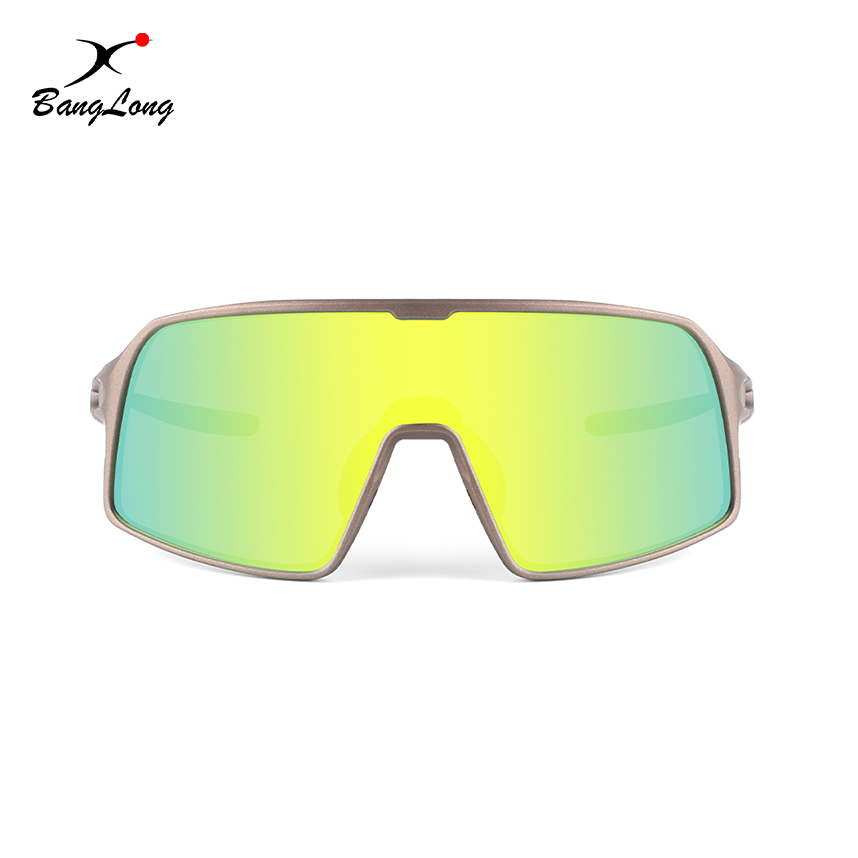
Choosing between polarized and non-polarized lenses requires understanding position-specific needs. Polarized lenses reduce harsh glare bouncing off flat surfaces. They work incredibly well for water sports or driving. However, they can sometimes flatten optical depth perception. This flattening hurts players tracking high-velocity balls. Judging a baseball in flight requires perfect, three-dimensional depth perception. We usually recommend non-polarized lenses for batters and infielders. Outfielders sometimes prefer polarized options to combat stadium light glare.
Visible Light Transmission dictates how much ambient light reaches the eye. A lower percentage means a darker lens. You need to match this specification to actual playing conditions. A 10-15% transmission rating works beautifully for bright, mid-day tournaments. A 20-30% transmission rating suits partly cloudy days perfectly. It also works well for late afternoon games when shadows lengthen across the field.
Frame architecture matters just as much as lens technology. Wrap-around designs block peripheral UV light effectively. They also prevent strong wind from drying out the eyes. The frame should follow the natural curve of the child's face. It must sit close to the cheekbones without resting on them. This aggressive curve provides a wide, unobstructed field of view.
Finally, you must demand explicit UV verification. Ensure the product functions truly as anti UV baseball glasses. They must block 100% of UVA and UVB radiation. Do not settle for just dark-tinted plastic. Dark lenses without proper UV protection cause pupils to dilate widely. This unnatural dilation lets in more harmful radiation than wearing no glasses at all.
Eyewear Selection Matrix by Playing Conditions
Feature | Specification | Ideal Playing Scenario |
|---|---|---|
VLT 10-15% | Darker tint | Bright, cloudless mid-day summer tournaments. |
VLT 20-30% | Medium tint | Partly cloudy days or late afternoon games. |
Copper/Amber Lens | High contrast | Tracking ground balls on green grass. |
Wrap-around Frame | Base curve 8 | Blocking wind and side glare in the outfield. |
We must acknowledge common parent frustrations regarding equipment adoption. If frames pinch the temples, young players will rebel immediately. If glasses slip constantly down the nose, they become annoying distractions. Children will simply leave uncomfortable gear in the dugout. A perfect fit dictates actual daily usage. You cannot force a child to wear a painful accessory.
You must test the frames under a protective batting helmet. Try them under a catcher's mask too if applicable. Batters take aggressive, violent swings. Catchers whip off their masks quickly to chase foul pop-ups. Straight temples slide into tight helmets much easier than hooked ear-pieces. Hooked ends often dig painfully into the skull under tight padding. This pressure causes severe headaches during the game.
Evaluate frames featuring hydrophilic rubber nose pads carefully. Look for similar gripping material on the ear socks. Hydrophilic rubber possesses unique chemical properties. It grips tighter as the player sweats. It keeps the frame locked firmly in place during aggressive sprints. The glasses should not bounce when the child runs the bases.
High-exertion play generates significant facial heat. This heat causes annoying lens fog. Look for properly vented lenses. Small cutouts at the top corner of the lens promote airflow. Half-frame designs also allow trapped heat to escape easily downwards. Proper ventilation prevents dangerous fogging during a critical defensive play.
A frequent mistake involves buying adult frames for a child. Oversized frames bounce during running and distract the athlete. They also leave large gaps where UV rays enter. Always measure the child's face width before purchasing. Buy youth-specific models designed for smaller head anatomies.
General youth leagues enforce strict safety gear policies. Organizations like Little League and USSSA prioritize player safety above all else. They generally encourage wearing protective eyewear enthusiastically. However, they demand safe materials. Glass lenses are universally banned. You should review your specific local league rulebook annually for updates.
Pitchers face highly unique equipment restrictions. Umpires generally restrict pitchers from wearing highly reflective mirrored lenses. Bright, flashy frame colors can also distract the batter. The rulebook aims to give batters a fair view of the release point. If your child pitches, you must buy understated frames. Choose matte black or grey frames. Select non-mirrored, muted lenses. Umpires hold the final discretion on acceptable on-field gear.
Competitive travel ball coaches treat proper glasses as mandatory. They face intense regional competition. They view unforced errors as completely unacceptable. Therefore, they treat baseball eyewear as part of the standard uniform. Outfielders and corner infielders must wear them during day games. Coaches know clear vision directly impacts defensive reliability. They cannot risk giving up runs caused by preventable sun blindness.
Choosing the right equipment requires a systematic evaluation. Standard lifestyle frames fail to meet the rigorous demands of the diamond. You must prioritize shatterproof polycarbonate lenses to ensure physical safety. Verify 100% UV protection to prevent long-term ocular damage. Select contrast-enhancing tints to improve tracking performance. Ensure a comfortable, helmet-compatible fit guarantees they actually wear them. Taking these steps secures their vision and elevates their game.
Start by measuring your child's face width accurately. Next, consult their coach regarding any specific pitcher restrictions or team uniform rules. Finally, compare product spec sheets for VLT levels and impact ratings before making a purchase. Finding the perfect pair of youth baseball sunglasses protects their long-term ocular health. Equip them properly today and watch their confidence soar on the field.
A: Yes, pitchers can wear them, but umpires strictly regulate their usage. The rulebooks allow them subject to umpire discretion. If the lenses are highly reflective or distracting to the batter, the umpire will ask the pitcher to remove them. Stick to matte frames and non-mirrored lenses to avoid any game-day issues.
A: No, eye black cannot replace protective eyewear. Eye black merely reduces the sun glare bouncing off a player's sweaty cheekbones. It offers absolutely zero physical impact protection against baseballs or dust. It also provides no defense against harmful UVA and UVB radiation entering the eyes.
A: Amber, brown, and copper are generally the best lens colors. They filter out scattered blue light and drastically enhance visual contrast. This makes the white ball and red seams pop against the sky. Grey lenses offer true color perception but do not enhance contrast effectively for tracking.
A: Polarized lenses block intense glare well, making them ideal for water sports. However, they can flatten depth perception slightly. Judging a high-velocity baseball in flight requires perfect depth perception. Therefore, non-polarized contrast-enhancing lenses are usually recommended for most infield and batter positions.


