

T: +86-20-86973099
E: sales@xqglasses.com
E: sales@xqglasses.com
NO.3, Yongfu Road, Sandong Avenue West, Huadu District, Guangzhou City, Guangdong Province, China
Views: 0 Author: Site Editor Publish Time: 2026-07-30 Origin: Site


Fishing often depends on noticing information that sits just beneath a bright, reflective surface. Intense glare can conceal fish movement, submerged vegetation, rocks, depth changes, and the path of a lure while also encouraging constant squinting. Polarized Fishing Sunglasses are designed to reduce this reflected glare, making the scene easier to interpret during long sessions near water. They do not make murky water transparent, but the right pair can improve visual comfort, reveal more usable detail, and protect the eyes when polarization, UV blocking, lens tint, optical quality, and fit work together.
Sunlight reaches an angler from several directions, including directly from the sky and indirectly after reflecting from the water. Reflected light from a relatively horizontal surface becomes strongly polarized, creating the bright sheet of glare that can dominate a lake, river, or coastal view. A polarizing filter is oriented to limit much of this reflected light while allowing useful light from other directions to pass. That selective filtering, rather than simple lens darkness, is why Polarized Fishing Sunglasses can reveal details that ordinary tinted sunglasses often leave hidden.
The practical difference becomes clear when an angler needs to locate weed edges, follow a fish through shallow water, identify a submerged branch, or watch how a lure behaves near cover. Removing part of the surface reflection improves contrast between these features and their surroundings. This can support more accurate casting and better lure control because the angler is responding to visible conditions rather than guessing. The improvement is strongest when the water has reasonable clarity and the viewing angle produces substantial glare; sediment, algae, depth, waves, and low light can still limit what is visible.
Polarization also helps beyond sight fishing. Bank anglers can examine shallow margins before stepping or casting, while boat anglers can read changes around docks, rocks, grass lines, and sandbars. The clearer surface view may also make it easier to notice floating debris or obstacles near the boat. Polarized Fishing Sunglasses therefore function as observation equipment as well as sunwear, although they should never be treated as a substitute for safe boating practices or dedicated protective eyewear where higher impact hazards exist.
Glare is more than an inconvenience because it forces the visual system to work around an intense source of reflected light. Anglers may respond by squinting, turning away from the water, or repeatedly adjusting their viewing position. Polarized Fishing Sunglasses reduce the brightness of that reflection, which may lessen glare-related eye strain and improve visual comfort. This matters during extended trips, when small discomforts can gradually reduce concentration and make it harder to monitor a float, line, lure, or changing water conditions.
Polarization does not magnify fish or create underwater detail that light cannot reach. Instead, it removes part of the competing surface reflection so existing contrast becomes easier to use. That distinction explains why the result can be dramatic in clear shallows but modest in heavily stained water. Even when fish remain invisible, Polarized Fishing Sunglasses may still improve the view of surface disturbances, nearby cover, floating vegetation, and objects immediately below the surface.
The viewing angle also matters. Glare changes as the sun moves, clouds pass, waves develop, or the angler turns relative to the water. A pair that produces a strong improvement in one direction may provide a less noticeable effect after the boat changes course. Anglers should therefore evaluate the whole field of view rather than expecting one fixed level of glare removal throughout the day.
A polarized label does not automatically confirm ultraviolet protection. Polarization controls reflected visible glare, while UV-blocking properties address ultraviolet radiation. Effective fishing eyewear should provide both because water activities involve sustained outdoor exposure and additional reflected light. Look for clear labeling that indicates 99–100% UVA and UVB protection or a UV400 rating rather than assuming that a dark or mirrored lens is protective.
Polarized lenses also have a practical limitation around electronic displays. They can darken, distort, or change the color of some LCD screens depending on the relative orientation of the lens and display filter. This may affect phones, chartplotters, cameras, or other marine instruments. Before relying on Polarized Fishing Sunglasses during a trip, anglers should test every frequently used display from normal seated and standing positions.
Lens selection should begin with the fishing environment rather than frame color or mirror appearance. Light intensity, water color, surrounding vegetation, cloud cover, and time of day all influence how much visible light and contrast an angler needs. Polarization remains useful across many environments, but the underlying tint affects brightness and color perception. A lens that feels comfortable offshore at midday may appear unnecessarily dark beside a shaded stream in the early morning.
Fishing Condition | Practical Lens Priority | Selection Reason |
|---|---|---|
Bright open water | Darker gray or brown base tint | Controls intense brightness while supporting comfortable all-day viewing |
Mixed sun and cloud | Medium brown or amber tint | Can provide useful contrast without becoming excessively dark |
Shaded rivers or early morning | Lighter tint with verified polarization | Preserves more available light while reducing surface glare |
Frequently changing conditions | Balanced medium tint | Avoids switching between lenses too often |
Screen-heavy boat operation | Polarization and display compatibility | Confirms that navigation and sonar displays remain readable |
Gray lenses generally maintain a relatively neutral color balance, while yellow-brown or amber tints can emphasize contrast in lower or variable light. However, tint preference is partly personal, and very dark lenses may reduce useful detail when illumination falls. Mirror colors should not be used as the only selection criterion because the visible outer coating does not fully explain the underlying base tint or visible-light transmission. Anglers should ask for the base lens color, UV rating, polarization performance, and intended light conditions before comparing appearance.
Lens quality is equally important. Distortion across the lens can bend straight lines, interfere with accurate visual judgment, and cause discomfort even when glare reduction is strong. A simple preliminary check is to view a straight vertical edge through the glasses and move the head slowly from side to side. Unnatural waviness suggests optical inconsistency, although proper laboratory testing remains more reliable for product evaluation and purchasing programs.
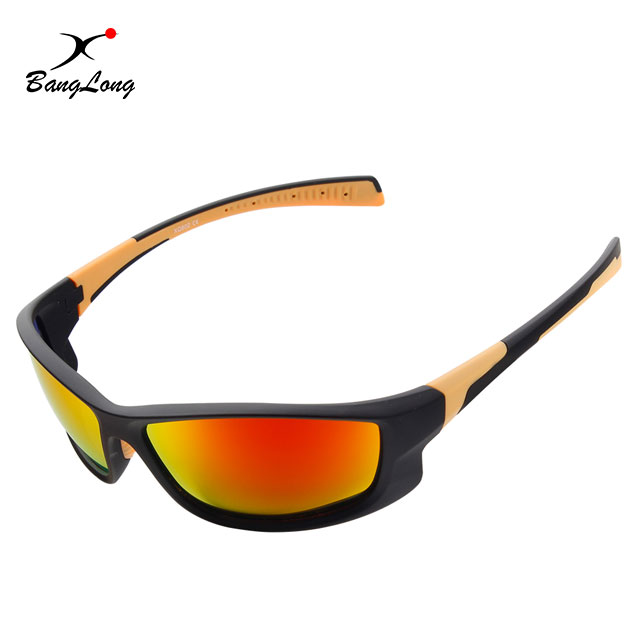
Material and construction should match the activity. The TAC Fishing Sunglasses use TAC lenses with a PC frame, a wraparound profile, UV400 protection, and soft-contact areas at the nose and temples. The product is offered with several polarized lens and Revo coating combinations, allowing the lens appearance to be adjusted without changing the need to verify suitability for the intended light conditions. The page also identifies anti-scratch, anti-impact, wind-resistant, and anti-slip features for its fishing-oriented design.
Polarized Fishing Sunglasses cannot perform consistently when the frame slides down, presses painfully behind the ears, or leaves large gaps around the lenses. A secure fit keeps the optical center in a stable position and prevents repeated adjustments while casting, handling equipment, or moving around a boat. The temples should remain steady without excessive pressure, and the nose area should support the frame without pinching. Comfort should be evaluated over time because a frame that feels acceptable for two minutes may create pressure points after several hours.
Wraparound coverage offers another practical advantage by reducing stray light entering from the sides. Side glare can wash across the inside surface of a lens and weaken the perceived benefit of polarization, particularly on wide, exposed water. A closer-fitting shape can also reduce wind exposure while a boat is moving, although adequate ventilation is still useful in humid conditions. A comfortable frame should remain stable while limiting excess light entering from the top, bottom, and sides.
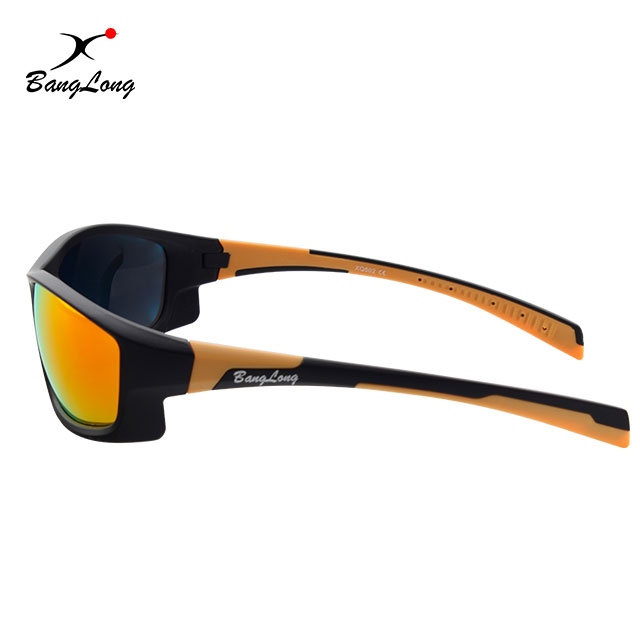
Frame width must match the wearer rather than merely appearing sporty. A frame that is too narrow may press against the temples, while an oversized frame can move during quick head turns. Anglers who wear hats should check for contact between the temple arms and hat band, and those using hearing protection or communication equipment should test the complete setup together. Product buyers comparing a broader Fishing Sunglasses Collection should evaluate multiple sizes and frame geometries instead of treating one wraparound profile as universally suitable.
Retention is especially relevant around moving water. A compatible strap can prevent loss when leaning over a boat, wading, or handling a fish, but it should not interfere with temple fit. Optional floating frame concepts may reduce the chance of losing eyewear after a drop, yet buoyancy should be verified for the finished configuration because lenses, hinges, decorations, and accessories all affect total weight.
A quick polarization check can identify whether a lens contains a functioning polarizing filter. View a compatible LCD screen through the lens and rotate the glasses approximately 90 degrees; a substantial change in brightness usually indicates polarization. Two polarized lenses can also be rotated against each other to observe darkening. These checks confirm the presence of a polarizing effect, but they do not measure UV protection, optical distortion, filter efficiency, impact performance, or manufacturing consistency.
Clean Polarized Fishing Sunglasses with fresh water after exposure to salt, spray, sand, sunscreen, or fine debris. Rubbing a dry, contaminated lens can drag particles across the surface and damage coatings. After rinsing, use an appropriate microfiber cloth and store the glasses in a protective case rather than leaving them face-down on a console or tackle box. Avoid exposing the frame to prolonged excessive heat, which can affect fit, adhesives, and some lens treatments.
Replacement should be based on functional condition, not age alone. Deep scratches in the central viewing area, coating separation, persistent haze, loose hinges, frame distortion, and an unstable fit can all reduce performance. Small marks near the edge may be tolerable, but damage directly in the line of sight can create distracting flare or distorted detail. Recheck display compatibility and fit whenever moving to a different lens, frame, or prescription configuration.
Polarized Fishing Sunglasses matter because they reduce the reflected glare that conceals useful detail and causes discomfort around water. Effective selection still requires more than polarization: verified UV protection, suitable tint, low distortion, secure fit, adequate coverage, and screen compatibility all influence the result. Guangzhou Xunqi Glasses Co., Ltd. is a sports eyewear manufacturer with in-house tooling, injection molding, lens processing, coating, assembly, and quality-control capabilities. Its fishing eyewear options can support different lens and frame requirements, but every configuration should be matched to the actual water, light, comfort, and usage conditions.
A: They reduce surface glare, which can reveal fish and underwater features when water clarity, depth, lighting, and viewing angle allow sufficient detail to reach the eye.
A: No. Polarization reduces reflected visible glare, while UV400 protection blocks ultraviolet wavelengths. Fishing sunglasses should provide verified polarization and clearly labeled UV protection.
A: Gray suits bright conditions and balanced color perception, while brown or amber can support contrast in variable light. The appropriate tint depends on brightness and personal comfort.
A: They still reduce surface glare, but they cannot remove suspended sediment or create visibility through opaque water. Benefits may be limited to surface and shallow details.
A: Yes. Some polarized lenses interact with LCD screens, causing darkening or color changes. Test the glasses with onboard displays before relying on them during fishing.
A: No. Excessively dark lenses may hide useful detail in shade, cloud, or early-morning light. Select darkness according to the environment and verified visible-light performance.


