

T: +86-20-86973099
E: sales@xqglasses.com
E: sales@xqglasses.com
NO.3, Yongfu Road, Sandong Avenue West, Huadu District, Guangzhou City, Guangdong Province, China
Views: 0 Author: Site Editor Publish Time: 2026-06-29 Origin: Site


Riding through harsh off-road terrain means battling constant mud. Heavy roost and blinding sweat severely impair your vision. These common elements create immediate operational hazards on the motocross track. You might quickly wipe your muddy lens out of desperation mid-race. However, improper cleaning methods cause permanent micro-scratches on sensitive plastics. Bad trackside habits also strip away factory anti-fog coatings entirely. High-end off-road eyewear represents a serious financial gear investment today. Poor post-ride maintenance forces you into premature and expensive lens replacements. It also degrades critical foam adhesives much faster than normal wear. Ultimately, this careless cycle leads to unnecessary replacement costs over time. It deeply compromises rider safety during intense, high-speed motos. We developed this comprehensive guide to solve these exact maintenance issues. Below, you will find a verified, step-by-step gear breakdown. We detail how to safely care for frames, foam, and polycarbonate lenses. You will learn to properly wash these specific components. We also highlight common pitfall practices destroying premium riding gear. Keep your vision completely clear and protect your equipment effectively.
Always remove the lens from the frame before deep cleaning to ensure mud trapped in the crevices doesn't cause abrasion.
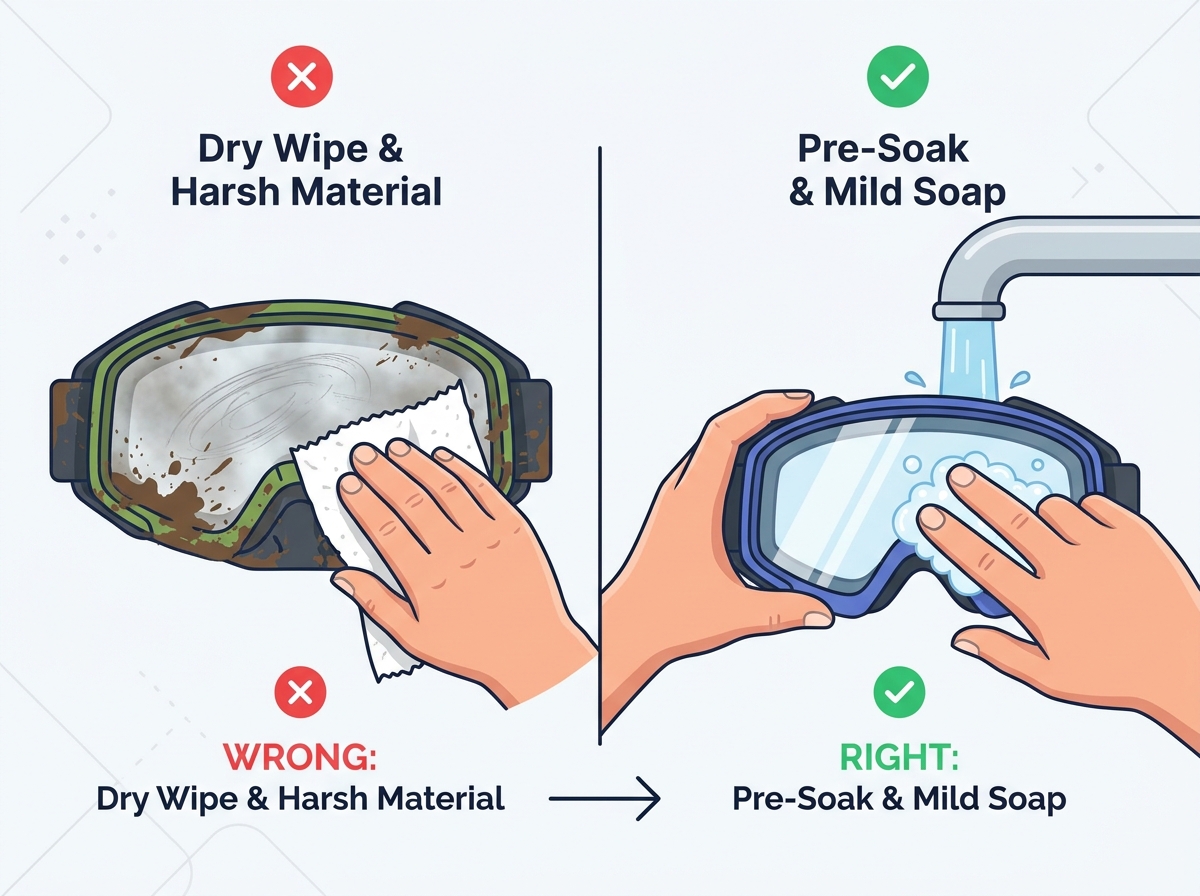
Never wipe dry mud off a polycarbonate lens; pre-soaking and running water are mandatory to prevent micro-scratches.
Avoid household glass cleaners (like Windex); ammonia and harsh chemicals permanently destroy factory anti-fog and anti-scratch coatings.
Air-dry goggle foam naturally; applying direct heat or using a clothes dryer will melt the structural adhesives.
Committing to routine irt bike goggles maintenance transforms your riding experience completely. It ensures reliable visual clarity during highly demanding off-road sessions.
You must evaluate your lens longevity accurately after every single ride. A well-maintained polycarbonate lens easily lasts a full racing season. Conversely, neglected lenses haze over after just three intense rides. Proper care preserves crucial optical clarity and vital structural integrity. Riders who follow strict maintenance protocols rarely experience sudden vision failure. They maintain a distinct competitive advantage through superior visual awareness on the track.
Replacing scratched lenses monthly creates a significant financial drain quickly. Most premium replacement lenses cost between twenty and fifty dollars. You avoid this recurring expense through basic post-ride diligence. Investing ten short minutes in proper care saves considerable money. You preserve your original gear investment effortlessly.
Maintenance Approach | Monthly Financial Impact | Post-Ride Time Required | Expected Lens Lifespan |
|---|---|---|---|
Aggressive Dry Wiping (Improper) | $20 - $50 recurring cost | 2 minutes | 3 to 5 rides maximum |
Proper Soaking and Hand Wash | $0 (Uses existing mild soap) | 10 minutes | Full racing season |
Compromised facial foam directly impacts your physical rider focus. Degraded foam loses its crucial absorptive qualities very quickly. Acidic sweat then drips directly into your eyes mid-ride. This sudden stinging sensation breaks your concentration on the challenging track. Furthermore, compromised anti-fog coatings cause highly dangerous mid-moto blinding scenarios. You simply cannot react to track obstacles without perfectly clear vision.
Knowing exactly how to handle soiled gear prevents long-term material damage. Different racing environments require highly specific, calculated cleaning approaches.
Your immediate trackside goal involves preventing heavy mud from caking. Hardened dirt permanently stains delicate facial foam. It embeds abrasive particles deeply into the plastic frame crevices. You must address this severe contamination before heading home.
Start by lightly rinsing heavily soiled gear using a clean water bottle. Never rub the polycarbonate lens during this quick trackside rinse. Rubbing dry dirt creates devastating permanent scratches immediately. Store the wet gear in a highly breathable fabric bag. Never place damp eyewear inside a tightly sealed plastic gear bin. Trapped moisture inside plastic containers allows destructive mildew to thrive rapidly.
Your ultimate post-ride goal requires complete removal of all abrasive grit. You must eliminate all sweat oils and fine track dust completely. You must achieve this deep clean without degrading sensitive material structures.
Knowing how to safely clean muddy dirt bike goggles involves complete disassembly first. You perform a gentle mild detergent soak to lift stubborn oils. Finally, you execute controlled air-drying procedures away from direct sunlight. This structured two-phase approach protects your sensitive gear investment entirely.
Protecting your premium Dirt Bike Goggles requires strict adherence to a safe washing protocol. Following these specific manual steps guarantees maximum operational longevity.
Carefully pop the polycarbonate lens out of the flexible urethane frame. Pulling the soft frame away from the lens prevents plastic stress cracks. Running lukewarm tap water over both separated components is highly necessary. This gentle initial rinse dislodges heavy dirt and loose track sand effectively. Do not rub the plastic surface at this early stage. Applied friction here will push sand directly into the delicate anti-scratch coating.
Submerge the empty frame in a large bowl of warm water. Use a mild, completely additive-free soap for this vital step. Baby shampoo or specialized off-road helmet wash works perfectly for this task. Gently massage the inner foam padding using only your thumbs. This gentle action releases deeply trapped sweat and body oils. Avoid aggressively wringing or twisting the soft facial foam. Twisting tears the delicate adhesive backing immediately away from the frame.
Use only your bare fingers for this highly critical washing step. Apply mild soapy water directly to the inner and outer lens surface. Gently lift the remaining dirt under a softly running sink faucet. Bare fingers help you feel any abrasive grit remaining on the plastic. Rinse the plastic thoroughly under clean, lukewarm water. Ensure absolutely no soap residue remains on either surface. Leftover soap causes severe smearing and blinding glare under stadium track lights.
Shake off excess water vigorously over a large sink. Pat the lens dry using a clean, premium microfiber cloth. Never use harsh paper towels or standard cotton bath towels. Paper products contain microscopic wood fibers causing severe surface abrasions. Hang the plastic frame in a highly ventilated indoor area. Keep it completely out of direct sunlight during the drying process. Intense UV exposure causes rapid physical degradation of the foam structure.
Advanced optical protection systems require highly specialized handling and installation techniques. These systems keep your vision clear during highly adverse racing conditions.
You must decide which specific system fits your current race conditions perfectly. Choosing correctly minimizes mid-race manual cleaning needs. It also drastically reduces intensive post-race scrubbing requirements. Roll-off systems excel during heavy, continuous mud races. They provide a continuous clear strip across your main line of sight. Conversely, utilizing tear off motocross goggles works best for dry, roost-heavy tracks. You simply discard the top plastic sheet when vision becomes compromised.
Proper installation dictates the entire system performance on the racing track. You must properly stack the thin plastic sheets meticulously. Press them tightly against the primary polycarbonate lens surface. Fold the pull tabs backward to prevent accidental multi-sheet deployment mid-air. This careful stacking prevents moisture and micro-dust from penetrating between thin layers. Trapped track dust entirely defeats the intended purpose of the optical system. It creates a hazy, completely unreadable field of view.
Roll-off film systems require meticulous mechanical care after every single ride. You must clean the small plastic film canisters thoroughly inside and out. Maintain proper film tension across the main viewing area always. Ensure the vital mud flap remains completely free of tiny grit. Grit trapped behind the flap will severely scratch the primary lens underneath. The advancing film simply drags this abrasive grit across your visual line.
Many riders accidentally destroy expensive equipment following terrible online advice. Understanding these common mechanical pitfalls saves you from constant gear replacement.
Many novice riders mistakenly use common household glass cleaners. Ammonia-based cleaning products cause severe molecular damage to advanced polycarbonate lenses. They cause the flexible plastic to become highly brittle over time. Brittle lenses shatter dangerously upon heavy roost impact. Furthermore, ammonia rapidly strips away specialized factory coatings chemically. You instantly lose your highly valuable anti-fog and anti-scratch protection.
Various online motorcycle forums frequently suggest putting dirty eyewear in the dishwasher. We strongly advise against this highly hazardous, lazy cleaning method. Sustained high heat levels melt the delicate foam glue instantly. Aggressive commercial dish detergents warp the flexible urethane plastic frames permanently. Your expensive gear will likely emerge completely unusable and structurally compromised.
Never wipe your sensitive lenses with convenient disposable paper products. Standard paper towels consist of harsh, microscopic wood fibers. Old cotton t-shirts often harbor deeply trapped dirt and abrasive track dust. Using these rough materials creates permanent, circular swirl marks immediately. These microscopic scratches ruin your optical clarity forever. They heavily amplify bright sunlight and cause blinding daytime glare.
Even perfect maintenance routines cannot make soft riding gear last forever. You must know exactly when equipment replacement becomes completely necessary for safety.
Inspect your washed equipment under a very bright, direct light source. Look closely for structural hazing across the main central viewing area. Identify any deep gouges located directly in your forward line of sight. Notice the complete failure of the internal anti-fog chemical layer. Extreme fogging occurs rapidly during low-speed, high-exertion track sections. These clear visible signs indicate mandatory and immediate lens replacement.
Pay close attention to the inner facial padding condition continually. Recognize when the soft material loses its natural elasticity completely. Degraded foam eventually fails to absorb acidic sweat effectively. You might notice it separating entirely from the main plastic frame edge. Degraded foam severely compromises your track comfort and physical riding safety.
Start shortlisting your specific optical replacement options quickly. Consider the following common functional upgrade paths:
Buy standard flat replacement lenses for immediate, cost-effective clarity restoration.
Upgrade to pre-curved, injection-molded lenses for significantly better impact resistance.
Invest in an entirely new modern goggle chassis featuring heavily updated ventilation.
Purchase advanced dual-pane lenses specifically designed for extreme cold weather riding.
Patience and mild cleaning agents always win over aggressive techniques. Proper washing techniques vastly outlast aggressive scrubbing and harsh household chemicals. You must treat your off-road eyewear as a highly critical safety device. Gentle handling preserves both optical clarity and vital foam integrity. We heavily encourage you to evaluate your current gear setup today. Check your used lenses for dangerous hazing or deep structural scratches. Inspect the facial foam for obvious signs of severe glue degradation. Explore high-quality replacement lenses immediately if yours show significant structural wear. Consider implementing advanced tear-off systems to protect your next valuable investment. Invest in specialized premium microfiber cleaning kits before your next intense ride. Protect your vision diligently so you can ride safely tomorrow.
A: No. Washing machines pose a severe structural risk to off-road eyewear. The intense mechanical agitation warps flexible plastic frames permanently. Hot water heavily degrades sensitive urethane materials. Furthermore, the chaotic machine environment heavily scratches delicate polycarbonate lenses against the steel drum. You also risk entirely melting the vital foam adhesives. We strongly recommend gentle, manual hand-washing only.
A: Submerge the empty frame in a mixture of warm water and baby shampoo. You can also use a very mild anti-bacterial soap. Gently massage the inner foam padding using only your bare fingers. Never aggressively wring or twist the soft material. Rinse it thoroughly under clean water. Ensure complete air-drying in a highly ventilated indoor space.
A: You should only use a high-GSM premium microfiber cloth. Microfiber fabric contains highly specialized synthetic threads. These ultra-soft threads actively trap fine dirt particles immediately. They pull the hazardous debris away from the plastic surface. They prevent dragging harsh sand across the delicate lens coating. This specific action prevents permanent micro-scratches effectively.


