

T: +86-20-86973099
E: sales@xqglasses.com
NO.3, Yongfu Road, Sandong Avenue West, Huadu District, Guangzhou City, Guangdong Province, China
Views: 0 Author: Site Editor Publish Time: 2026-11-19 Origin: Site


Riding crowded mountains brings inherent safety risks. Merging trails or carving on your blindside requires sharp spatial awareness. Limited peripheral vision creates dangerous blind spots. These blind spots compromise your reaction times. Standard eyewear frames often act like artificial blinders. They restrict your natural field of view. This forces you to physically turn your head to check your surroundings. Constant head movement disrupts your balance and edge control. Modern eyewear engineering solves this structural flaw through wide-lens, frameless, and curved architectures. We will evaluate how these advanced designs eliminate blind spots. By understanding lens geometry and frame construction, you can choose gear that maximizes functional visibility. Let us examine the technical mechanics behind peripheral expansion and how it directly impacts your safety on the slopes.
Lens Curvature Dictates FOV: Spherical and toric lens shapes physically wrap further around the face, increasing peripheral and vertical visibility compared to traditional flat cylindrical lenses.
Frameless Designs Reduce Obstructions: Minimizing the plastic bezel at the edge of the lens directly correlates to a wider unobstructed viewing angle, though it requires precise helmet integration.
Optical Clarity Equals Functional Vision: A wide field of view is useless if the edges suffer from optical distortion, glare, scratches, or fogging; premium anti-fog, anti-scratch, and distortion-free tapering are mandatory.
Fit Overrides Features: If wide-lens ski goggles do not seal correctly against the rider's specific face shape, or if they shift during riding, pressure points and optical misalignment will negate any peripheral vision benefits.
Humans naturally possess a binocular field of view spanning roughly 200 degrees horizontally. We also see about 130 degrees vertically. This wide angle lets us detect motion and track other riders without turning our heads. Traditional frames drastically restrict this baseline. Standard designs narrow your functional field of view to just 120 or 150 degrees. This reduction creates massive blind spots. You notice this most on the heel-side edge during a descent. Peripheral tracking is non-negotiable when you ride sideways.
Thick, over-molded plastic frames sit too far from the eye. They create a pronounced tunnel-vision effect. The thicker the frame bezel, the more it blocks your lateral sightlines. This blinder effect forces you into dangerous physical compensations. You rotate your neck and drop your shoulders to check your periphery. This throws off your center of gravity. Every millimeter of plastic extending inward from the frame edge translates to lost vision. At high speeds, a fraction of a second lost to a blind spot causes severe collisions.
Bringing the lens closer to the face widens the peripheral angle. This relies on basic optical physics. A lens sitting closer to your pupil lets your eye look past the frame edges. You maximize the visible area. However, this proximity creates engineering trade-offs. Moving the lens inward reduces the internal volume of the frame. Less internal air volume restricts ventilation. It exponentially increases the risk of fogging. Manufacturers balance this close-to-face proximity with aggressive airflow channels. You need clear vision from the first chair to the last run.
Here are three common on-mountain scenarios where restricted FOV causes immediate problems:
Merging onto crowded cat tracks from steep tree runs.
Spotting your landing during backside spins in the terrain park.
Tracking out-of-control skiers approaching from your uphill blindside.
Understanding geometric differences between lens types helps you evaluate their impact on peripheral vision. Each shape interacts with light and frame architecture differently.
Lens Geometry | Curvature Profile | Peripheral Vision (FOV) | Optical Distortion Risk |
|---|---|---|---|
Cylindrical | Curved horizontally, flat vertically | Narrow to Moderate | High at extreme edges |
Spherical | Curved horizontally and vertically | Maximum | Low (with tapered thickness) |
Toric | Tight horizontal, shallow vertical | High to Maximum | Very Low |
Cylindrical lenses represent the flat profile. They feature a traditional curve that bends horizontally across the face. They remain completely flat on the vertical axis. Manufacturers produce them cheaply, but they carry distinct performance limitations. The flat vertical profile catches overhead sunlight easily. This creates a high risk of blinding glare. They also suffer from peripheral distortion. The physical distance between your eye and the lens varies drastically from the center to the edges. This geometry results in a narrower field of view and pronounced blind spots.
Spherical lenses utilize a dual-axis curvature. They create a bubble profile. They curve both horizontally and vertically, mimicking the natural anatomical shape of the human eye. Opting for spherical snowboard goggles maximizes your peripheral vision. The bubble shape physically wraps further around your face. It pushes the frame edges out of your direct sightline. This design also increases the internal frame volume. The extra space actively aids in fog prevention by allowing better air circulation. The uniform distance from the eye to the lens significantly reduces optical distortion at the extreme edges.
Toric lenses represent the hybrid architecture. Toric geometry combines the most effective traits of the previous two designs. It features a tighter horizontal curve combined with a shallower vertical curve. Toric lenses offer the expansive peripheral benefits of spherical designs. They maintain a lower-profile aesthetic. This hybrid shape integrates much better with modern helmet brims. It prevents the dreaded forehead gap while eliminating lateral blind spots. Aggressive riders often prefer this shape for its balance of optics and fit.
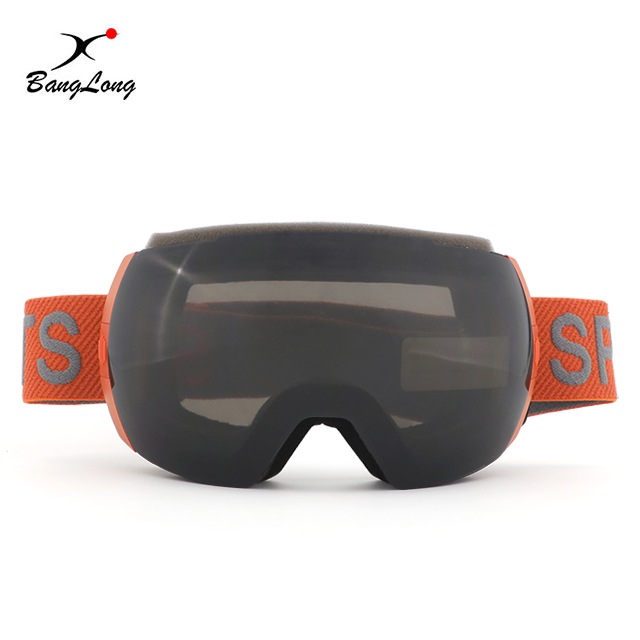
Marketing claims often confuse an oversized aesthetic with actual functional peripheral expansion. A massive lens slapped onto a thick internal frame does not improve your field of view. True frameless architecture relies on edge-to-edge lens designs. By removing the peripheral plastic bezel entirely, your eye tracks laterally without hitting a visual barrier. In these designs, the lens itself acts as the structural boundary. The internal chassis sits behind the lens. It remains completely hidden from your line of sight.
The mechanics of frameless architecture require robust lens rigidity. The lens serves as the outer shell. It must withstand impacts without shattering or popping out of the internal chassis. High-end models utilize injection-molded polycarbonate to achieve this structural integrity. When executed correctly, a frameless design allows you to utilize the absolute maximum width of the lens. You gain critical degrees of lateral vision. This translates directly to earlier detection of approaching riders and terrain hazards.
Oversized wide-lens designs introduce a critical implementation risk regarding helmet compatibility. They frequently clash with helmet brims. When a helmet sits too low, it pushes the oversized frame down your nose. This downward pressure restricts nasal breathing. It causes severe discomfort over time. More importantly, it alters the optical center of the lens. If the lens sits too low, the engineered focal point misaligns with your pupil. This misalignment reintroduces distortion and negates the wide-angle benefits. Precise helmet integration is mandatory for frameless designs to function correctly.
A wide field of view is functionally useless if the edges of the lens are blurry. Wide lenses must be thicker in the center and precisely tapered toward the edges. This tapered thickness prevents light refraction from warping your peripheral vision. Cheap, uniformly thick curved plastics bend light unnaturally. This refraction causes headaches, spatial disorientation, and misjudgment of distances. Injection-molded tapering ensures light hits your eye accurately, regardless of where you look through the lens.
Physical scratches on the lens exterior catch light and create localized glare. These scratches act as micro-blind spots. Over time, a heavily scratched lens severely degrades your field of view. Your eyes constantly refocus past the damage. Hardened anti-scratch treatments are mandatory. They utilize oleophobic and hydrophobic coatings. They repel ice, water, and oils while providing a hardened barrier against physical abrasions. This maintains optical clarity season after season.
A fogged lens reduces your field of view to absolute zero. Dual-pane construction creates a necessary thermal barrier between the freezing outside air and the warm inside air. Hydrophilic inner coatings absorb internal moisture before it condenses into blinding droplets. Armored venting systems ensure continuous airflow to regulate internal temperatures. These three elements must work together flawlessly to maintain edge-to-edge clarity in high-exertion scenarios.
No single lens tint provides optimal visibility across all lighting conditions. Mountain weather changes rapidly. You shift from bright sun to dense fog in minutes. This reality makes magnetic snowboard goggles highly advantageous. They allow for quick-swapping lenses to adapt to shifting light without removing the frame from your face. Modern magnetic retention systems maintain frame rigidity. They avoid bulky plastic clips or levers that restrict the peripheral field of view.
Visible Light Transmission (VLT) directly impacts glare reduction and visual acuity. Mirrored coatings and specific VLT percentages decrease the amount of visible light reaching your eyes. This reduces intense glare reflected off the snow. Severe glare artificially creates blind spots by overloading your retinas and washing out terrain definition. Clear lenses allow up to 100% VLT. They work perfectly for night sessions to maximize light intake. However, clear lenses fail completely at reducing daytime glare. Never use them in bright conditions.
Weather Condition | Recommended VLT % | Lens Tint Category |
|---|---|---|
Bluebird / Bright Sun | 5% - 15% | Dark Grey, Black, Heavy Mirror |
Partly Cloudy / Mixed | 20% - 40% | Copper, Rose, Light Mirror |
Overcast / Whiteout | 50% - 70% | Yellow, Amber, High Contrast |
Night Riding | 80% - 100% | Clear, Very Light Yellow |
Even the most advanced Ski Goggles fail if they do not fit your face correctly. Triple-layer face foam must conform perfectly to your cheekbones, temples, and nose bridge. The inner microfleece layer wicks sweat. The structural foam layers create the seal. A poor seal allows cold drafts to enter. This triggers immediate fogging and waters your eyes. A fit that is too tight causes painful pressure points. This forces you off the mountain early.
Strap security plays a vital role in maintaining optical alignment. Silicone-backed straps grip the helmet shell firmly. They prevent unwanted movement. Proper strap tension prevents the frame from sliding down your face during heavy landings or high-speed chatter. If you constantly readjust your gear, the optical center shifts. This shifting instantly reintroduces frame blind spots and distorts your peripheral tracking. Outriggers attached to the strap help distribute this pressure evenly across your face when wearing a helmet.
Riders who wear prescription glasses face unique challenges. Wearing glasses beneath protective eyewear inherently restricts peripheral vision. The frames of the glasses act as secondary blinders. They compound the tunnel-vision effect. Specific Over The Glasses (OTG) models attempt to mitigate this issue. They feature notched frames and deeper internal volumes. This accommodates prescription eyewear without crushing it against your face. You must ensure the OTG frame itself still provides adequate lateral visibility.
Face shape variations require alternative frame geometries. Riders with lower nose bridges often experience gaping at the bottom of standard frames. This gap allows wind to blast directly into the eyes. Asian fit or low bridge fit models feature extra foam padding at the nose and a modified frame curve. This adjustment ensures the wide-lens sits at the correct optical distance from the eye. Choosing the right snowboard goggles requires matching the frame geometry to your specific facial structure. You seal out wind while maintaining maximum peripheral visibility.
Wide-lens and frameless designs objectively reduce blind spots on the mountain. They achieve this by utilizing spherical or toric geometries that physically wrap around your visual periphery. Tapered lens thicknesses prevent edge distortion and maintain true optical clarity. When engineered correctly, these features allow you to track lateral movement and spot terrain changes without turning your head. This directly improves your reaction time and safety.
When shortlisting your next pair, prioritize lens curvature first. Look for spherical or toric shapes paired with frameless architectures to maximize your field of view. Evaluate magnetic swap capabilities for quick adaptation to changing weather conditions. Select VLT ratings based on your primary riding environments. Ensure you have the right tint to combat glare or enhance contrast in flat light.
To ensure optimal performance, follow these next steps:
Test shortlisted frames while wearing your specific snow helmet to verify seamless compatibility and prevent the goggle gap.
Check for pressure points around the nose bridge and cheekbones during the fitting process to ensure long-term comfort.
Verify the strap features silicone backing and robust outriggers for secure grip and reliable optical alignment.
Confirm the actual peripheral gain by testing your lateral vision in a brightly lit environment before hitting the slopes.
A: The core technology, lens materials, and frame geometries are identical across both disciplines. Snowboarders ride in a sideways stance. This positioning makes peripheral vision and blind-spot reduction even more critical. A wider field of view helps snowboarders look downhill over their leading shoulder without losing balance or edge control.
A: High-quality spherical lenses do not distort your vision. They utilize a tapered thickness design. The lens is thicker in the center and thinner at the edges. This precise tapering eliminates the light refraction and peripheral distortion commonly found in cheap, uniformly thick curved plastics.
A: Fogging occurs when oversized frames block your helmet's lower ventilation channels. It also results from a poor foam seal that allows cold air to mix with body heat. Wiping the inside of a wet lens physically degrades the factory anti-fog coating, leading to continuous moisture buildup.
A: For flat light and whiteout conditions, you need high-VLT lenses that maximize light transmission. Yellow, rose, and amber tints are highly effective. These colors filter out blue light. This dramatically enhances contrast and helps you identify shadows, bumps, and terrain changes that would otherwise remain hidden.
A: Clear lenses offer maximum visible light transmission, making them perfect for night sessions. They lack the mirrored coatings and dark tints necessary to filter intense UV rays. Using clear lenses during the day exposes your eyes to severe snow glare, which can temporarily blind you and create dangerous visual voids.
A: Modern magnetic systems are highly secure. Premium brands utilize strong rare-earth magnets distributed around the frame perimeter. Many designs incorporate secondary physical locking mechanisms or snap-hinges. This combination ensures the lens remains firmly attached during high-speed impacts while still allowing for rapid swaps.
A: An oversized frame exhibits clear fitment issues. It pinches your nose and restricts your breathing. The lower frame rests uncomfortably below your cheekbones. You notice visible gaps between the face foam and your skin. These gaps allow wind and snow to penetrate the interior.


