

T: +86-20-86973099
E: sales@xqglasses.com
NO.3, Yongfu Road, Sandong Avenue West, Huadu District, Guangzhou City, Guangdong Province, China
Views: 0 Author: Site Editor Publish Time: 2026-11-24 Origin: Site


Quick-swap lens technology solves a real problem on the mountain. You can adapt instantly to changing light conditions when clouds roll in. But this convenience brings up a common fear: losing your lens during a high-speed run or a hard crash. High speeds, aggressive carving chatter, and inevitable impacts put serious mechanical stress on your gear. Traditional friction-fit lenses handle these forces differently than magnetic systems. A good magnetic goggle should feel completely secure on your face. It must eliminate the worry that your lens will eject on your first hard fall. Buyers need to know if modern convenience compromises safety and high-speed performance. Not all magnetic systems are engineered equally. Evaluating magnetic retention strength, mechanical locking hybrids, and frame dynamics gives you a clear framework. This knowledge helps you make an informed purchasing decision and ski with confidence.
Hybrid Systems are the Standard: The most secure magnetic lens ski goggles utilize a hybrid approach—combining rare-earth magnets for alignment with mechanical levers or snap-locks for crash retention.
Aerodynamics Matter: High-speed runs test lens security through wind resistance; spherical ski goggles often deflect wind more efficiently, reducing the aerodynamic drag that threatens magnetic seals.
Impact vs. Vibration: Pure magnetic systems rarely fail from high-speed vibration (chatter) but are highly susceptible to ejection during direct frontal impacts or twisting falls (tomahawks).
User Error is a Primary Risk: Ice buildup in the magnetic channel or improper seating accounts for a significant percentage of real-world lens failures.
Aggressive downhill runs subject your gear to intense physical forces. Gravity accelerates your mass. Wind resistance and terrain irregularities push back. The core engineering challenge for any quick-swap system involves maintaining a secure connection against these opposing forces. Understanding how aerodynamics and kinetic energy interact with magnetic fields reveals exactly why some lenses stay put while others fail.
Wind resistance scales dramatically as your speed increases. Hit 40 mph on a steep groomer, and the air feels like a solid wall. This high-velocity airflow looks for any edge or gap to exploit. If the wind catches the lip of your lens, it generates aerodynamic drag. This drag creates a pressure differential known as the peel effect. High-pressure air hits the front of the lens. A low-pressure zone forms at the peripheral edges. This differential attempts to physically lift the lens away from the frame gasket.
Lens shape plays a massive role in mitigating this force. Cylindrical lenses curve horizontally across your face but remain flat vertically. This flat vertical profile presents a broader surface area to oncoming wind. In contrast, spherical ski goggles curve on both the X and Y axes. They mimic the natural shape of the human eye. This dual-axis curvature offers a significantly more aerodynamic profile. The spherical shape allows high-speed wind to flow smoothly over the top and bottom edges rather than slamming into a flat surface. By deflecting wind efficiently, spherical designs minimize the wind-catching edges and drastically reduce the peel-force threatening the magnetic seal.
Lens Shape | Curvature Profile | Wind Deflection Efficiency | Peel-Force Risk at High Speeds |
|---|---|---|---|
Cylindrical | Horizontal only (flat vertically) | Moderate | Higher (edges catch crosswinds) |
Spherical | Dual-axis (horizontal and vertical) | Excellent | Low (smooth airflow over all edges) |
Toric | Dual-axis (tighter horizontal radius) | Excellent | Low (combines aerodynamics with optical clarity) |
Speed is rarely smooth. Skiing over East Coast ice, frozen crud, or freshly groomed corduroy generates sustained micro-vibrations. This chatter travels from your skis, up through your boots and skeleton, directly into your helmet and goggles. You might assume that violent, high-frequency shaking would rattle a magnetic lens loose.
Physics dictates otherwise. Premium goggles utilize high-grade neodymium magnets, typically rated N52. These rare-earth magnets generate an incredibly dense, continuous magnetic field. Mechanical friction fits can slowly wiggle loose under sustained vibration. Magnetic fields do not fatigue. The N52 magnets pull the lens against the frame with constant, active force. Because the engagement remains continuous, vibration-induced ejection proves highly unlikely. The lens simply floats within the magnetic field, absorbing the chatter without breaking the bond.
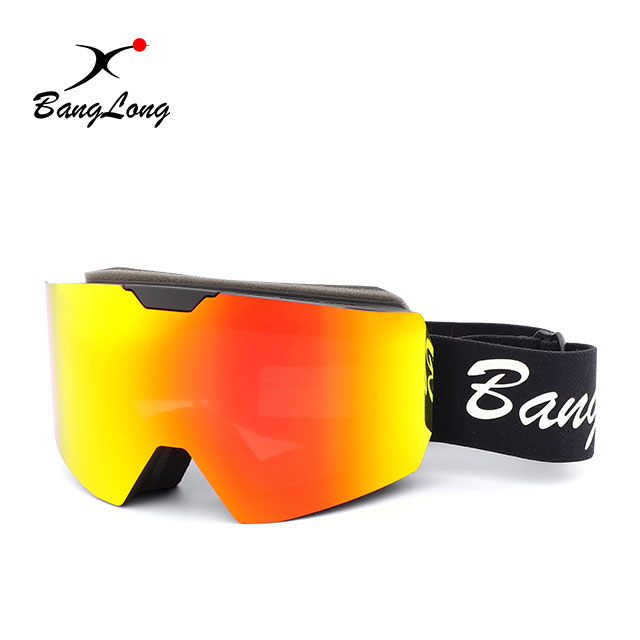
The market offers distinct approaches to quick-swap technology. Categorizing these solutions helps you align the product type with your specific skiing style, speed preferences, and risk tolerance. The choice ultimately comes down to pure speed of swapping versus absolute mechanical security.
Pure magnetic systems rely entirely on a series of magnets embedded around the perimeter of the frame and the corresponding edges of the lens. These designs typically utilize anywhere from 8 to 12 contact points to hold the lens in place.
Mechanism: Direct magnetic attraction provides 100% of the retention force. There are no physical clips, levers, or hinges.
Pros: These systems offer the absolute fastest swap time available. You can often change the lens without removing the goggles from your face or taking off your heavy winter gloves. Simply pinch the frame, pull the lens away, and drop the new one into place.
Cons: Pure magnets carry the highest risk of ejection during a crash. While they handle direct frontal wind well, frame torsion easily breaks the magnetic bond. If you fall and the frame twists against your face, the rigid lens pops off instantly.
Best For: Casual resort skiers, beginners, and those who stick to groomed runs at moderate speeds. If you prioritize convenience over high-impact security, pure magnetic systems deliver unmatched ease of use.
Engineers developed hybrid systems to solve the torsion problem inherent in pure magnetic designs. These systems use magnets for alignment but rely on physical hardware for final retention.
Mechanism: Magnets pull the lens instantly into the correct seating position. Once seated, you engage a physical locking mechanism—such as dual-side levers, push-buttons, or snap-hinges—to secure the lens to the chassis.
Pros: Hybrid systems provide exceptional security. They represent the baseline standard for serious snow goggles. The mechanical lock ensures the lens stays planted during hard impacts, tomahawk falls, and severe frame twisting. The lens will not eject unless the mechanical lock physically breaks.
Cons: The swap time is slightly slower than pure magnetic setups. You usually need to take the goggles off your helmet to disengage the locks. Moving mechanical parts can occasionally freeze or jam if packed with wet snow.
Best For: Aggressive freeriders, park skiers, racers, and anyone venturing into the backcountry. If you ski fast and fall hard, hybrid retention is mandatory.
System Type | Primary Retention | Secondary Retention | Swap Speed | Crash Security Rating |
|---|---|---|---|---|
Pure Magnetic | N52 Neodymium Magnets | None | Under 5 seconds | Moderate |
Hybrid Magnetic | N52 Neodymium Magnets | Mechanical Levers/Locks | 10 - 15 seconds | Maximum |
Traditional | Friction-Fit Notches | Frame Tension | 1 - 2 minutes | High |
When comparing different Ski Goggles, you need a specific technical framework to assess their security. Marketing claims often highlight the speed of the lens swap. You must evaluate the engineering behind the retention system to ensure it holds up on the mountain.
Do not simply count the magnets. More magnets do not automatically equal better security if those magnets are small, weak, or poorly distributed. Assess the engineering of the magnetic array. Look for concentrated magnetic strength at the highest stress points. The nose bridge and the extreme peripheral edges near the outriggers experience the most flex and wind drag. A superior design places larger, higher-grade N52 magnets in these critical zones. This ensures the lens remains anchored where peel-forces are strongest.
The relationship between the flexible frame and the rigid lens dictates crash security. Most goggle frames utilize Thermoplastic Polyurethane (TPU) because it remains pliable in sub-zero temperatures. It conforms comfortably to your face. However, a highly flexible frame creates a structural vulnerability. If you crash and the TPU frame twists, the rigid lens cannot bend with it. The magnetic seal breaks, and the lens ejects.
To combat this, evaluate goggles that utilize a semi-rigid sub-frame. This internal skeleton maintains a stiff contact patch for the magnetic seal, even while the outer TPU frame flexes against your skin. This dual-density construction isolates the lens from facial contortions. It preserves the magnetic bond during impacts.
If you opt for a hybrid system, scrutinize the mechanical locks. Compare the common lock types available on the market.
Dual-Side Levers: Located near the strap hinges, these levers clamp down over the edges of the lens. They are highly secure but can be difficult to operate with thick mittens.
Single-Side Push Buttons: A spring-loaded button releases a catch on one side, allowing the lens to pivot out. These are faster to operate but introduce a small internal spring that can freeze.
Integrated Outrigger Locks: The strap outrigger itself acts as the locking mechanism. When the goggles are strapped to your face, the tension pulls the outrigger down over the lens, locking it in place.
Evaluate the durability of these mechanisms under extreme cold. Brittle plastics shatter upon impact at low temperatures. Look for reinforced composites or nylon blends that retain their impact resistance in freezing conditions.
Manufacturer claims only tell half the story. Look beyond the marketing copy and seek out independent reviews. Search specifically for reports detailing lens security during high-speed runs and violent crashes. Real-world validation from skiers with similar riding styles provides the most accurate assessment of a goggle's retention capabilities. If aggressive freeriders report that a specific model survives tomahawk falls without ejecting the lens, you can trust that retention system.
Even premium gear has limits. Understanding the practical realities and edge cases where magnetic systems fail allows you to mitigate those risks effectively on the hill.
Crash dynamics dictate lens failure modes. Direct frontal impacts rarely cause ejection. When you hit the snow face-first, the force pushes the lens deeper into the frame. This reinforces the magnetic seal. The system works perfectly under direct compression.
Failures occur during glancing blows or twisting falls. Catch an edge at high speed and tumble violently, and the side of your helmet and goggles strike the snow repeatedly. This lateral force twists the goggle frame. Because pure magnetic lenses lack mechanical anchors, this torsional flex shears the magnetic bond laterally. The lens slides sideways off the magnets and pops out into the powder.
User error combined with extreme weather causes a massive percentage of lens failures. The primary culprit is ice buildup inside the magnetic channel. Remove a lens on a powder day, and snow inevitably blows into the empty frame. Snap the new lens in without clearing the snow, and your body heat melts the flakes slightly. The freezing ambient air then turns that moisture into solid ice.
Even one millimeter of ice breaks the physical proximity required for magnetic fields to function effectively. Magnetic strength drops exponentially as distance increases. An ice gap drastically reduces retention strength. The lens will likely blow off during your next fast run.
Follow these steps to clear ice and snow from the magnetic channel:
Remove the goggles from your helmet and step into a sheltered area away from blowing snow.
Tap the flexible TPU frame firmly against your knee to dislodge loose powder.
Use a dry microfiber cloth to wipe down every individual magnetic contact point on the frame.
Inspect the corresponding magnets on the replacement lens to ensure they are completely dry.
Align the lens and listen for the distinct, sharp snap that indicates flush magnetic seating.
Many lenses are lost before the skier even reaches the downhill run. Careless handling accounts for numerous ejections. Push your goggles up to rest on the brim of your helmet, and the helmet's edge can catch the lower lip of the lens. Pull the strap tight, and the helmet physically pries the lens off the magnetic mounts. Bumping your face against the heavy metal safety bar on a chairlift can easily knock a pure magnetic lens loose. It will plummet into the woods below. Always handle pure magnetic frames by the outer edges. Pull them away from your face before sliding them up onto your helmet.
Purchasing winter optics requires weighing ultimate value against your specific use case. You must balance the need for instant adaptability against the demand for absolute mechanical security.
For the vast majority of skiers, the ability to instantly adapt to flat light greatly outweighs the slight chance of lens ejection during a crash. Skiing in flat light with a dark lens is incredibly dangerous. You cannot see ice patches, moguls, or terrain drops. The primary safety benefit of a quick-swap system is preventing accidents caused by poor visibility. magnetic lens ski goggles allow you to switch to a high-contrast low-light lens in seconds when the afternoon shadows fall.
If you are an aggressive skier, hybrid systems effectively eliminate the security trade-off. By combining magnetic alignment with mechanical locks, you gain the rapid adaptability required for changing weather without sacrificing the security needed for high-speed impacts.
Advanced retention technology carries a price premium. Hybrid magnetic systems cost more than traditional friction-fit lenses or budget pure-magnetic options. You must assess the long-term return on investment. A pure magnetic lens lost in deep powder during a crash is expensive to replace. If a hybrid locking system prevents just one lost lens over its lifespan, the upfront investment pays for itself immediately. The robust construction of hybrid frames typically outlasts cheaper alternatives. This provides better value over multiple seasons.
Magnetic ski goggles provide exceptional security for fast runs and high-speed aerodynamics, provided you choose the right retention system for your riding style. Pure magnetic systems offer unmatched convenience but remain vulnerable to torsional flex during high-impact crashes. Hybrid systems solve this by adding mechanical locks, delivering the ultimate combination of speed and safety.
Verify the specific locking mechanism of your shortlisted goggles to ensure it matches your dexterity needs and glove thickness.
Test helmet compatibility in person to ensure the helmet brim does not push down on the goggle frame and weaken the magnetic seal.
Read independent crash reviews from skiers who share your terrain preferences to confirm real-world retention performance.
Practice clearing the magnetic channels of snow and ice indoors before attempting a high-speed lens swap on a freezing chairlift.
A: Pure magnetic systems can pop out during twisting falls or lateral impacts because frame torsion breaks the magnetic bond. However, hybrid systems that use mechanical levers alongside magnets will not pop out during a crash unless the physical locking mechanism is destroyed.
A: A hybrid magnetic goggle combines rare-earth magnets for instant lens alignment with physical mechanical locks, like levers or push-buttons, for final retention. This design offers the fast swapping of magnets with the crash security of traditional frames.
A: Yes. The dual-axis curve of a spherical lens deflects high-speed wind much more efficiently than a flat cylindrical lens. This aerodynamic profile reduces wind drag and minimizes the peel-force that attempts to lift the lens away from the magnetic seal at high speeds.
A: Tap the frame gently against your knee to dislodge loose snow. Use a dry microfiber cloth to wipe the magnetic contact points clean. Never use sharp tools, as they will scratch the lens or tear the face foam. Keep spare lenses in a warm pocket to prevent refreezing.
A: Wind alone rarely defeats high-grade N52 magnets on a direct downhill run. However, severe crosswinds combined with a highly flexible frame can compromise weaker pure-magnetic systems by creating a pressure differential that lifts the lens edges.
A: Total count matters less than magnet grade and placement. Good goggles typically use 8 to 16 points of contact. Look for designs that concentrate larger, high-strength N52 magnets at high-stress areas like the nose bridge and the extreme peripheral edges.


