

T: +86-20-86973099
E: sales@xqglasses.com
NO.3, Yongfu Road, Sandong Avenue West, Huadu District, Guangzhou City, Guangdong Province, China
Views: 0 Author: Site Editor Publish Time: 2026-11-27 Origin: Site


The winter sports eyewear market is highly saturated; brand differentiation relies heavily on specialized lens technology and tailored visual performance rather than just strap aesthetics. Selecting the wrong Visible Light Transmission (VLT) profiles or prioritizing aesthetic mirror coatings over optical clarity leads to poor user experience, high return rates, and dead inventory. Product development teams must engineer custom ski goggles by aligning lens base tints, advanced coatings, and interchangeability features with specific regional weather patterns and target skier demographics. We will break down how to match base dyes with vacuum-applied mirrors, navigate the manufacturing realities of photochromic tech, and ensure your product line meets strict safety compliance standards.
VLT Dictates Performance: Base tints control contrast and depth perception, while mirror coatings primarily manage glare and aesthetic appeal.
Interchangeability is the Standard: Because a single lens color cannot meet all shading needs, magnetic ski goggles with dual-lens packages offer the highest versatility and market appeal for direct-to-consumer brands.
Advanced Tech Drives Premium Margins: Photochromic and smart LCD lenses require higher Minimum Order Quantities (MOQs) but capture the high-end, early-adopter market segment.
Compliance is Non-Negotiable: Customization must operate within the strict boundaries of CE and ANSI standards for UV protection and impact resistance to mitigate brand liability.
Visual acuity directly impacts skier safety and performance. A poorly tinted lens flattens the terrain, hiding ice patches and moguls. Skiers rely on high contrast to read the snow surface at high speeds. If your lens washes out the shadows, the user will struggle to navigate safely. You must engineer lenses that actively manage light rather than just blocking it.
Visible Light Transmission (VLT) dictates how much ambient light passes through the lens to the eye. The scale runs from 0% to 100%. Low VLT percentages represent dark lenses built for bright, cloudless days. High VLT percentages indicate light lenses designed for severe whiteout conditions and heavy snowfall. You must match VLT profiles to the exact mountain light levels your target demographic experiences.
Geographical target markets dictate your inventory strategy. Brands selling primarily in the Pacific Northwest face frequent overcast days and heavy precipitation. They require standard tints with high VLT ratings. Conversely, brands targeting high-altitude Colorado resorts experience intense alpine sun and high UV exposure. They need low VLT options to protect users from eye fatigue.
Cosmetic appeal must never compromise functional optical clarity. A striking blue mirror finish looks fantastic on the retail shelf. However, the underlying base tint must suit the target environment. If you apply a heavy mirror over a dark base tint, the lens becomes useless in the shade. Prioritize optical performance over pure exterior aesthetics.
VLT Category | Transmission Percentage | Ideal Weather Conditions | Primary Function |
|---|---|---|---|
Category 4 | 3% - 8% | Extreme Alpine / Glacier | Maximum glare reduction at high altitudes. |
Category 3 | 9% - 18% | Bright Sun / Cloudless | Prevents eye fatigue on standard bluebird days. |
Category 2 | 19% - 43% | Partly Cloudy / Variable | Balances glare reduction with shadow enhancement. |
Category 1 | 44% - 80% | Overcast / Heavy Snow | Maximizes contrast in flat light environments. |
Category 0 | 81% - 100% | Night Skiing | Provides physical protection with zero light filtration. |
Manufacturing lenses involves a precise two-step industrial process. First, factories inject a base dye into the raw polycarbonate material. This base tint dictates contrast and depth perception. Next, they apply a specialized vacuum mirror coating. This external layer reflects specific light wavelengths and reduces surface glare. You cannot fix a bad base tint with a good mirror coating.
Fixed-lens models offer high manufacturing cost-efficiency. They work well for entry-level recreational product lines. However, interchangeable systems command premium market positioning. A single color cannot adapt to rapidly shifting mountain weather. Offering magnetic ski goggles allows users to swap lenses instantly. This creates a recurring revenue stream through standalone replacement lens sales. Users appreciate the ability to switch from a dark morning lens to a high-contrast afternoon lens without taking off their helmet.
Adaptive technologies provide another lucrative customization route. Standard photochromic lenses adjust automatically to ambient light changes. They rely on UV exposure to activate the darkening molecules. However, they can suffer from temperature sensitivity. Extreme cold slows their transition speed, leaving skiers temporarily blinded when moving from shade to sun. Emerging smart LCD electrochromic lenses solve this problem. They change tint in 0.1 seconds. They use internal battery power to offer instant visual adaptation. This feature appeals strongly to high-end early adopters who demand immediate performance.
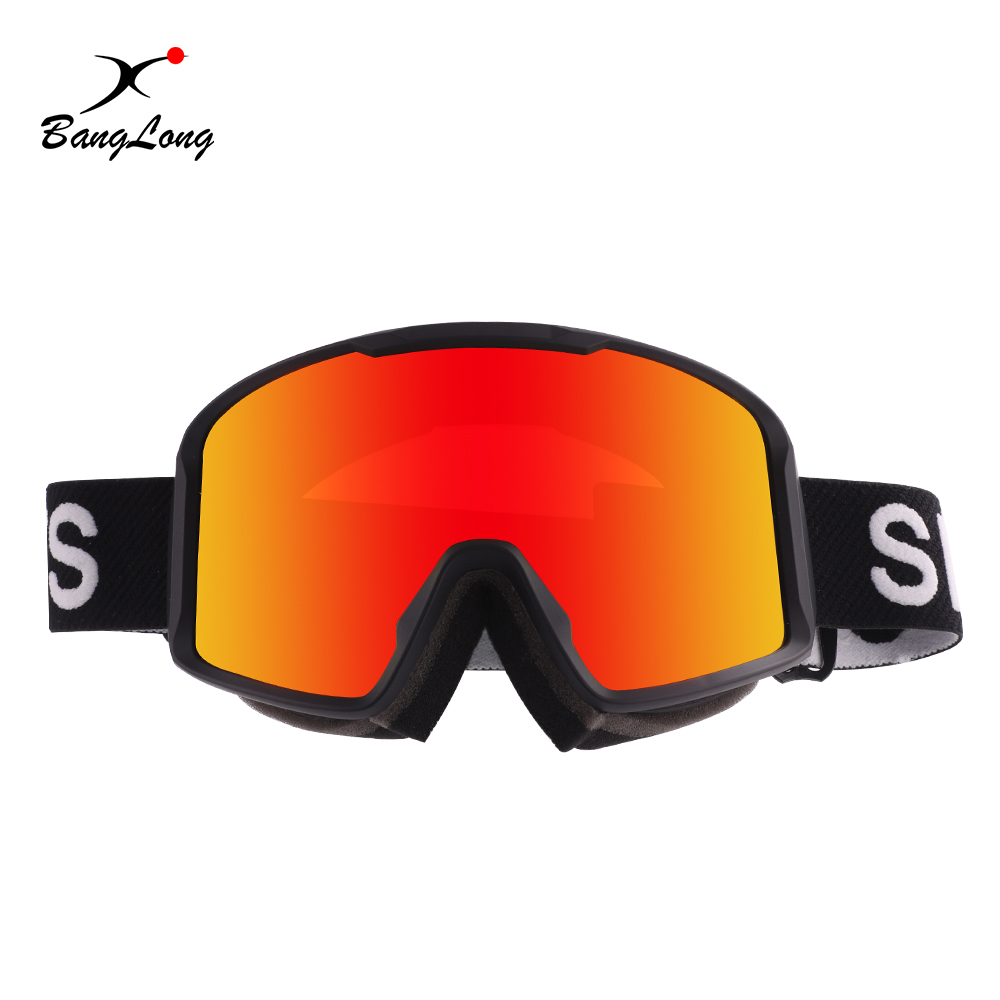
Selecting the right lens color requires understanding specific environmental challenges. You must map technical features directly to tangible user outcomes. Different base dyes absorb different parts of the visible light spectrum.
These challenging environments demand high VLT lenses to maximize visibility when the sun disappears behind heavy storm clouds.
Colors: Yellow, Rose, Amber.
Outcome: Filters out blue light to enhance shadows and contrast in flat light or snowy conditions.
Application: Yellow lenses excel in heavy snow by making dark shapes pop against the white background. Rose tints offer a slightly more natural color balance while still boosting contrast.
High-altitude sunny days require low VLT lenses to protect the retina from intense UV radiation and reflected snow glare.
Colors: Dark Grey, Dark Brown, Platinum.
Outcome: Reduces eye fatigue and prevents snow blindness by blocking maximum visible light.
Application: Dark grey provides true color perception without distortion. Dark brown adds a slight contrast boost while still blocking harsh glare.
Variable weather days utilize medium VLT lenses to handle shifting cloud cover and intermittent sunlight.
Colors: Copper, Light Rose with flash mirrors.
Outcome: Provides a "one-quiver" solution for recreational skiers who do not want to change lenses throughout the day.
Application: Copper bases adapt well to shifting cloud cover. Flash mirrors reflect just enough glare to handle brief periods of direct sunlight without darkening the lens too much in the shade.
You can expand your total addressable market by integrating prescription (Rx) solutions. Visually impaired skiers need highly personalized lenses that correct myopia and astigmatism. You can offer custom Rx inserts that snap securely behind the main protective lens. Alternatively, you can design over-the-glasses (OTG) frames. These feature deeper internal cavities and notched foam to fit standard prescription eyewear comfortably.
Custom lens tints require high-quality frame integration. Pair your lenses with flexible TPU (Thermoplastic Polyurethane) frame materials. TPU maintains its flexibility in freezing temperatures, ensuring a perfect fit across different face shapes. Integrate custom strap branding with silicone backing to grip helmets securely. Holistic customization builds strong, lasting brand loyalty.
Moisture management remains critical for all winter sports. Dual-pane lens construction prevents rapid temperature transfer between the cold outside air and the warm inside air. You must apply premium inner-lens anti-fog treatments during manufacturing. Combine this with outer-lens hydrophobic coatings. These treatments maintain tint effectiveness in wet conditions. They repel snow and water instantly upon contact, keeping the field of view clear.
The industry constantly debates polarized vs. non-polarized lenses in snow sports. Polarization effectively cuts harsh horizontal glare from the snow surface. However, it can also hide the glare of dangerous ice patches. You should offer polarized options carefully. Target them toward backcountry skiers facing extreme alpine glare. Avoid them for resort skiers navigating icy groomed runs where spotting ice is a matter of safety.
Coating Type | Application Surface | Primary Function | Manufacturing Process |
|---|---|---|---|
Anti-Fog | Inner Lens | Absorbs moisture to prevent condensation buildup. | Chemical dip or spray application before assembly. |
Hydrophobic | Outer Lens | Repels water and snow instantly upon contact. | Vacuum deposition or wipe-on chemical treatment. |
Anti-Scratch | Outer Lens | Protects the mirror finish from physical abrasion. | Hard-coat resin applied via dip process and UV cured. |
Mirror Coating | Outer Lens | Reflects specific light wavelengths to reduce glare. | Vacuum plating with metallic oxides. |
Manufacturing custom dye lots involves strict volume requirements. Standard tints usually have low Minimum Order Quantities (MOQs). Proprietary base colors demand significant upfront volume commitments. Specialized multi-layer mirrors also increase your required production volume. Plan your inventory scaling accordingly to avoid overstocking niche colors.
Analyze your cost-to-retail markup carefully. Basic Ski Goggles yield reliable profit margins and appeal broadly to the mass market. Smart LCD technology carries high research, development, and component costs. You must position these products at a luxury retail price point to maintain profitability.
Customization heavily impacts supply chain lead times. Off-the-shelf lenses ship relatively quickly. Custom mirror vacuum plating adds weeks to the manufacturing timeline. Photochromic film integration requires specialized curing processes. Factor these production delays into your seasonal launch schedule to ensure products hit the shelves before the first snowfall.
Calculate your projected seasonal demand based on historical sales data.
Identify the specific VLT profiles required for your primary target regions.
Negotiate MOQs with your manufacturing partner based on standard vs. proprietary tints.
Factor in an additional 30 days of lead time for any custom vacuum plating or photochromic integration.
Optical distortion ruins the user experience entirely. Cheap cylindrical lenses often suffer from severe prismatic distortion. They bend light unnaturally at the peripheral edges, causing headaches and nausea. Injection-molded spherical or toric lenses offer optical superiority. They mimic the natural curvature of the human eye, providing true visual clarity across the entire field of view.
Mandatory testing ensures absolute product safety. Your lenses must provide complete UVA, UVB, and UVC protection. They must pass rigorous high-velocity impact resistance tests to protect against tree branches and ski poles. You must require CE and ANSI certification documentation from your manufacturing partners. Safety compliance is absolutely non-negotiable to mitigate brand liability.
Evaluate your manufacturing partners rigorously. Implement strict prototype testing protocols immediately. Conduct real-world snow testing before approving mass production. Verify anti-fog longevity in freezing temperatures. Confirm perfect frame fit and universal helmet compatibility. Check tint accuracy against your initial design specifications using a spectrophotometer.
Request physical lens samples from multiple suppliers to compare optical clarity.
Conduct drop-ball impact testing to verify ANSI Z87.1 compliance.
Test anti-fog performance by exposing the inner lens to steam for a minimum of 30 seconds.
Verify VLT percentages using a calibrated spectrophotometer to ensure manufacturing consistency.
Perform field testing in sub-zero temperatures to check TPU frame flexibility and magnetic retention strength.
Successful customization of ski goggles requires a data-driven approach to VLT and climate, prioritizing optical clarity, adaptable technology, and safety over purely aesthetic trends. For new product lines, brands should start with a versatile magnetic system, offering one low-VLT and one high-VLT lens, before scaling into complex photochromic or polarized SKUs.
Request base-tint and mirror-coating sample kits from vetted manufacturers immediately.
Verify optical clarity and impact resistance through independent third-party lab testing.
Finalize MOQ negotiations based on projected seasonal demand.
Launch with a versatile dual-lens magnetic system before scaling into complex SKUs.
A: The optimal middle ground for variable weather falls in the 20% to 30% VLT range. These lenses typically utilize a copper or rose base tint. They balance glare reduction in sunlight with adequate contrast during passing clouds.
A: These systems use rare-earth magnets embedded in the frame and lens perimeter. They allow users to swap custom tints in seconds. Skiers can adapt to changing light without removing the goggles from their helmet.
A: Yes, brands can offer personalized Rx inserts that snap securely behind the main goggle lens. Alternatively, they can design OTG (Over-The-Glasses) frames with deeper cavities to accommodate standard prescription eyewear comfortably.
A: Yes, but it requires partnering with specialized optical manufacturers. These factories apply photochromic films or inject light-sensitive dyes into the lens material. This advanced process usually demands a higher minimum order quantity.
A: The base tint is the actual color of the lens material. It filters light and dictates contrast. The mirror coating is an external treatment. It reflects glare and provides the exterior aesthetic finish.
A: They are not strictly necessary and are sometimes discouraged. While polarized lenses reduce eye fatigue from glare, they can flatten visual depth. This makes it difficult for skiers to spot dangerous icy patches on the slopes.
A: Manufacturing typically takes 45 to 90 days. The exact timeline depends on the complexity of the custom dyes, the specific mirror coatings required, and the manufacturer's current seasonal production capacity.


