

T: +86-20-86973099
E: sales@xqglasses.com
E: sales@xqglasses.com
NO.3, Yongfu Road, Sandong Avenue West, Huadu District, Guangzhou City, Guangdong Province, China
Views: 0 Author: Site Editor Publish Time: 2026-06-08 Origin: Site


Riding sports often demand a significant investment in specialized gear. You might feel a common temptation. Many riders try using a single pair of goggles for both winter sports and summer riding to save money. This buyer's dilemma makes sense at first glance. They look nearly identical from five feet away. They share similar strap designs, basic frame shapes, and colorful lenses.
However, reality paints a much harsher picture. Swapping them across seasons introduces severe visibility risks. Using the wrong goggles causes instant fogging during critical moments. It also leads to intense physical discomfort. You will likely suffer sweat blindness on a hot dirt trail. Conversely, you face freezing skin and frostnip on a snowy peak.
We aim to clarify this confusion. This article provides an objective, technical breakdown of lens architecture, foam density, and ventilation systems. We will explore how different microclimates dictate specific equipment designs. Understanding these engineering differences helps you make a safe, cost-effective equipment decision.
Lenses: Snow goggles use dual-pane lenses to insulate and prevent fogging; dirt bike goggles rely on single-pane lenses optimized for tear-offs and impact resistance.
Ventilation: Dirt goggles feature open-cell foam to maximize airflow and block roost (dirt/mud); snow goggles use dense, closed-cell foam to trap heat and block freezing winds.
Face Foam: Dirt models prioritize multi-layer moisture-wicking to absorb heavy sweat. Snow models prioritize plush, insulating layers to prevent skin exposure in sub-zero temperatures.
Cross-Compatibility: Using dirt bike goggles for snow requires specific aftermarket modifications (like dual-pane lens swaps), while using snow goggles for dirt biking often results in extreme overheating.
Riders face a highly specific business problem on the trail. They need unimpeded vision in highly variable microclimates. Goggle manufacturers do not just mold plastic and attach a strap. They engineer distinct optical solutions. They base these solutions on the dominant threat of the specific environment. They must balance heat and sweat against cold and condensation.
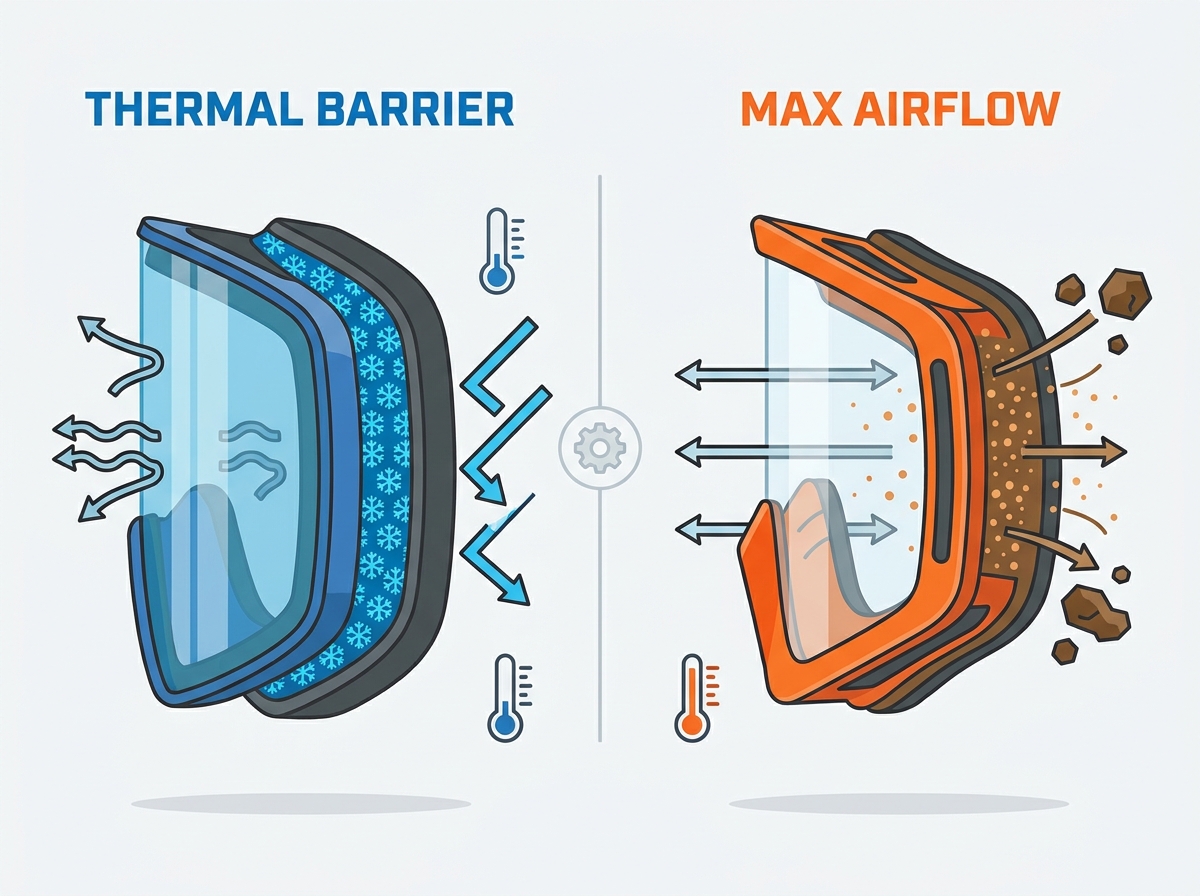
Snow goggle philosophy centers on insulation. Manufacturers engineer them as a completely sealed, thermal barrier. Your face radiates intense body heat while riding. The ambient air remains freezing. This massive temperature difference creates the perfect environment for condensation. Snow goggles regulate this temperature difference. They insulate the inner airspace from the outside environment. This physical barrier prevents condensation from forming on the inside of the lens.
Dirt bike goggle philosophy takes the exact opposite approach. Manufacturers engineer them as an open exhaust system. Summer trail riding generates massive amounts of sweat. The primary goal is funneling maximum air across the face. This constant airflow evaporates sweat rapidly. It prevents fogging during intense physical exertion at lower speeds. Simultaneously, the system must block physical debris. It must filter out roost, dust, sand, and stray branches.
You cannot effectively merge these two philosophies into a single, unmodified product. A sealed thermal barrier causes extreme overheating in the summer. An open exhaust system invites frostbite in the winter.
When you evaluate motocross goggles vs ski goggles closely, the differences become obvious. Every component serves a distinct environmental purpose.
Lens design represents the largest functional gap between the two disciplines. Snow goggles feature a dual-pane sealed lens. Think of it like a double-glazed window in a house. A layer of insulating gas or air sits between two physical lenses. This stops the cold outside air from meeting the warm inside air. Therefore, it effectively stops fogging. Furthermore, snow lenses feature heavy UV filtering. They use specialized tints like rose, yellow, or persimmon. These specific colors enhance contrast in flat light conditions on white snow.
Dirt applications require a completely different optical approach. They feature a single-pane lens, usually crafted from Lexan or premium polycarbonate. These materials offer absolute optical clarity. More importantly, they provide crucial impact resistance against flying rocks and roost. Single lenses integrate seamlessly with tear-off or roll-off film systems. Mud splatters constantly during a motocross race. Riders need the ability to pull a thin plastic film away instantly to restore clear vision. A bulky dual-pane lens makes mounting tear-off pins difficult and impacts visual clarity when layered with mud.
Temperature dictates material selection. Snow frames utilize proprietary urethane blends. These specific plastics remain pliable and soft in sub-zero temperatures. Stiff frames in the cold present two massive problems. First, they cannot conform to your face, causing large facial gaps where freezing wind enters. Second, brittle plastic shatters upon impact, creating a severe safety hazard during a crash.
High-quality Dirt Bike Goggles prioritize heat resistance. They are built to withstand high summer heat without warping or melting. The frame must maintain a rigid, reliable seal against fine dust and sand. While they remain flexible for comfort, they possess a higher structural rigidity than snow models to survive rock strikes and abrasive mud.
Ventilation foam is the unsung hero of eye protection. Snow models use dense, restrictive closed-cell vent foam around the frame perimeter. This specific density allows minimal moisture to escape. Primarily, it blocks cold air penetration. It prevents freezing winds from causing frostnip around the sensitive skin of your eyes.
Dirt models use highly porous, thin, open-cell vent foam. They prioritize maximum air intake. The open structure acts like a breathable mesh. It dries sweat immediately. Engineers calculate just enough density to filter out sand and dirt particles without restricting the crucial breeze. If you use this porous foam at high speeds in the snow, your eyes will immediately water and freeze.
Environmental Component Analysis Matrix
Component | Snow Environment Focus | Dirt Environment Focus |
|---|---|---|
Primary Lens | Dual-pane, thermal sealed | Single-pane, tear-off compatible |
Frame Material | Cold-weather pliable urethane | Heat-resistant, rigid structured TPU |
Vent Foam | Dense, restrictive, closed-cell | Porous, breathable, open-cell |
Face Foam | Plush, insulating micro-fleece | Multi-layer moisture wicking |
Many riders ask about cross-compatibility. The compatibility reality is nuanced. Yes, you can use them, but only with specific modifications. Running a stock summer goggle in the winter guarantees immediate lens fogging. It also guarantees a freezing, painful face. The porous foam and single lens simply cannot handle the cold.
If you plan to optimize dirt bike goggles for snow, you must perform several critical modifications. This "crossover" modification checklist ensures baseline safety and comfort.
Mandatory Upgrade: You must swap the stock single lens for an aftermarket dual-pane thermal lens. Many top-tier motocross brands sell these thermal lenses separately. Without this dual-pane barrier, your body heat will condense and freeze on the plastic within minutes.
Airflow Management: You must address the high-flow ventilation. Taping off the upper and lower frame vents is a common rider hack. You use durable tape to restrict cold air intake through the porous foam. It remains an imperfect solution, but it significantly reduces freezing drafts.
Nose Guards: You should add an extended snow deflector. Dirt goggles often leave the nose exposed or use minimal guards. Snow riding requires a large, specialized nose beak to protect the exposed skin from frostbite and biting winds.
The final verdict remains practical. This modification route proves cost-effective for occasional winter riders. It saves you from buying a dedicated second pair. However, dedicated snowmobilers or skiers will find the modified dirt setup inferior. The taped vents look sloppy. The face foam lacks the plush insulation required for extreme sub-zero comfort.
Fitment challenges dictate how well your eye protection performs. Goggles must sit flush against your face. Simultaneously, they must interface seamlessly with the helmet's eye port. A perfect seal prevents wind leaks and dust intrusion. Poor integration compromises both comfort and safety.
Premium motocross helmet goggles feature specialized outrigger designs. Outriggers are plastic extensions positioned on the sides of the frame. They push the strap attachment point outward. This design pulls the strap wide, accommodating the protruding jawline and bulky visor of full-face motocross helmets. It ensures the frame presses evenly against your face, rather than lifting away at the edges.
Strap specifications also vary wildly. Snow goggles often feature exceptionally long straps. They include aggressive silicone backing strips designed to grip slick, hard-shell ski helmets. Ski helmets lack the deep ridges found on dirt gear. Dirt straps are optimized specifically for the rear curvature of a motocross shell. They stay planted in the helmet's designated strap channel.
Eye-port geometry creates the most noticeable mismatch. Motocross helmets possess angular, aggressively wide eye ports to maximize peripheral vision. Ski helmets often feature a flatter, more uniform brow line. Mismatching these systems causes severe issues. Wearing an angular dirt frame with a flat ski helmet often causes the dreaded "gaper gap." This leaves your forehead completely exposed to freezing air. Conversely, a bulky snow frame in a tight dirt helmet will pinch your nasal passages, severely restricting your breathing.
Choosing the correct gear requires evaluating your primary riding environment. Understanding snow goggles vs dirt bike goggles allows you to make an informed investment. Follow this buying framework to guide your purchase.
You are riding exclusively in sub-freezing temperatures.
You engage in high-speed snowmobiling, skiing, or snowboarding where windchill is the primary environmental threat.
You require specialized low-light optical tints to read terrain in flat, snowy light conditions.
You wear a dedicated, smooth-shell ski or snowmobile helmet.
You ride frequently in dust, thick mud, or extreme summer heat.
You absolutely need tear-off or roll-off systems for racing or trail riding directly behind other riders.
You are a heavy sweater requiring maximum moisture-wicking, multi-layer face foam.
You wear a full-face motocross helmet with an angular eye port.
You are a budget-conscious rider who rides dirt 80% of the year and tackles snow trails only 20% of the time.
You prefer modularity. Look for specialized MX frames that officially sell dual-pane thermal lens accessories and cold-weather foam inserts.
You understand you will need to swap lenses and adjust vent tape manually between seasons.
We see quite clearly that while these two styles share a recognizable silhouette, their internal engineering solves completely opposite environmental problems. Snow gear focuses entirely on thermal insulation and preventing cold-weather condensation. Dirt gear prioritizes massive airflow, sweat evaporation, and impact resistance against trail debris.
We advise you never to compromise your vision just to save a little money. A completely fogged lens at 40mph is a critical, potentially fatal safety failure. A freezing face ruins the riding experience entirely. Always choose the equipment built explicitly for the exact climate you are riding in.
Take stock of your primary riding season and helmet style. If you plan to ride year-round, budget for two dedicated setups or heavily invest in a premium, modular crossover kit. Browse specific collections today to find dual-pane winter models or high-ventilation dirt solutions tailored to your trail.
A: Yes, they will fog up almost immediately. They use single-pane lenses. When the intense body heat radiating from your face meets the freezing ambient winter air against that thin single plastic pane, the moisture instantly condenses and freezes. They lack the insulating thermal barrier needed for cold weather.
A: Technically yes, but you will suffer extreme discomfort. The thick, closed-cell foam prevents airflow, causing rapid and extreme overheating. Sweat will pool inside the frame because they lack specialized moisture-wicking layers. Furthermore, they do not have the necessary mounting pins for mud tear-offs.
A: Crossover goggles are specialized frames designed primarily for dirt, but sold with modular winter kits. Manufacturers provide aftermarket accessories like dual-pane thermal lenses, thicker cold-weather foam inserts, and removable extended nose beaks. This allows a rider to adapt a single frame to handle winter riding safely.


