

T: +86-20-86973099
E: sales@xqglasses.com
E: sales@xqglasses.com
NO.3, Yongfu Road, Sandong Avenue West, Huadu District, Guangzhou City, Guangdong Province, China
Views: 0 Author: Site Editor Publish Time: 2025-12-15 Origin: Site


When it comes to winter sports like skiing and snowboarding, having the right gear is essential to ensure both safety and performance. Among the most important pieces of equipment are ski goggles. Whether you are carving through fresh powder, navigating challenging terrains, or just enjoying a leisurely ride down the slopes, the clarity and protection offered by ski goggles can make a substantial difference in your experience. At BangLong Sports Glasses, we specialize in providing high-performance ski goggles designed to withstand extreme weather conditions and deliver superior eye protection. In this article, we will explore the importance of ski goggles and how our products can enhance your winter sports experience.
Ski goggles are specialized eyewear designed for use during winter sports like skiing and snowboarding. They offer far more than just style; they provide crucial protection from harsh weather elements, UV rays, wind, snow, and debris. Unlike regular sunglasses, ski goggles offer a wider field of view and are equipped with features that make them ideal for the demanding conditions encountered on snowy slopes.
The reflection of sunlight off the snow creates intense glare, which can strain your eyes and reduce visibility. Skiing or snowboarding at high altitudes, where UV rays are more potent, can also increase the risk of eye damage. Ski goggles are specially designed with lenses that block harmful UV rays, preventing damage to your eyes. The lenses also help to reduce glare, making it easier to see the terrain clearly, especially during bright, sunny days. By protecting your eyes from both UV rays and glare, our ski goggles ensure you can enjoy your adventure without compromising your vision or safety.
When you are on the slopes, you are exposed to harsh conditions like wind, blowing snow, and debris, all of which can hinder your vision and cause discomfort. Regular eyewear doesn’t provide the level of protection needed for these extreme conditions. Ski goggles form a complete seal around your eyes, preventing wind and snow from entering, and safeguarding your eyes from harmful debris. Whether you’re skiing at high speeds or simply enjoying a scenic ride, ski goggles offer essential protection, ensuring that your vision remains clear and your eyes remain comfortable.
The lens technology in ski goggles plays a pivotal role in maintaining clarity and vision. One of the most common problems skiers and snowboarders face is fogging, especially during intense runs. Ski goggles with double-lens construction and anti-fog coatings are designed to prevent condensation, ensuring your lenses stay clear in various temperatures. The inner lens creates a layer of air that insulates your eyes from the cold, while the outer lens resists scratches and provides impact resistance. These features allow you to focus on the slopes instead of worrying about fog or impaired vision.
Moreover, the ventilation system in ski goggles helps manage airflow, further reducing the chances of fogging. High-performance goggles, like those provided by BangLong, are engineered with well-placed vents that enhance airflow, ensuring your lenses stay clear even during demanding runs.
UV protection is one of the primary reasons why ski goggles are superior to regular sunglasses. At high altitudes, the sun's rays can cause more damage to the eyes, and snow reflects sunlight, intensifying the exposure. Our ski goggles come with lenses designed to block 100% of UVA and UVB rays, safeguarding your eyes from harmful radiation. This ensures long-term protection, preventing conditions like snow blindness, which is caused by the overexposure to UV rays in snowy environments.
Additionally, many of our goggles come with polarized lenses that help reduce glare. These lenses filter out horizontally polarized light, which is responsible for the intense reflections from snow and ice, allowing you to see clearly even in bright conditions.
Comfort and fit are crucial when selecting ski goggles. Poorly fitted goggles can cause discomfort, fogging, or even leave you vulnerable to environmental elements like wind and snow. Our ski goggles feature soft foam padding around the frame, providing a comfortable fit that adapts to the shape of your face. Adjustable straps ensure that the goggles stay securely in place, preventing them from sliding down or shifting during your activities. The ergonomic design guarantees a snug fit, preventing snow from entering, and maintaining warmth and comfort.
One of the key features of our ski goggles is their helmet compatibility. Skiers and snowboarders often wear helmets, and our goggles are designed to fit perfectly with most helmets on the market. The adjustable straps can be customized to accommodate different helmet sizes, ensuring that you have a secure and comfortable fit while still benefiting from maximum protection and clarity.
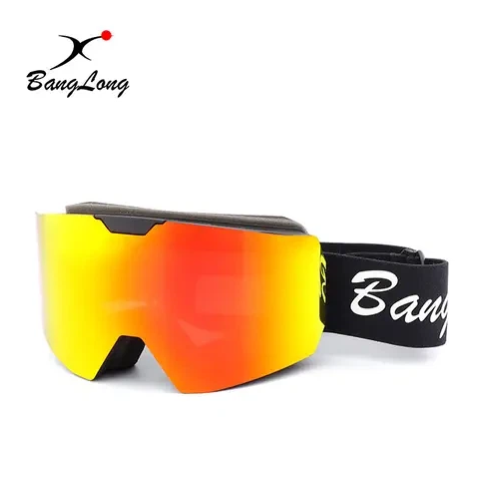
Lens color is an important consideration when choosing ski goggles. Different lens tints are designed to enhance visibility under varying light conditions. The right lens color can improve contrast, reduce glare, and help you navigate different terrains more safely.
On cloudy or overcast days, ski goggles with lighter tints—such as yellow, amber, or rose—are ideal. These lenses help to enhance contrast, allowing you to spot terrain changes even in flat light conditions. The extra light passing through these lenses improves visibility and helps prevent eye strain when skiing in cloudy or foggy conditions.
On bright, sunny days, darker lenses such as gray, brown, or mirrored lenses are the best option. These lenses reduce glare and block more sunlight, allowing you to enjoy clear vision without squinting. They are particularly useful when skiing on sunny days in high-altitude locations, where the snow reflects a significant amount of sunlight.
Clear lenses are perfect for night skiing or in very low-light conditions. These lenses allow maximum light transmission, ensuring that you can see clearly when skiing in the dark, while still offering protection against wind and snow.
There are various types of ski goggles designed to meet different needs and preferences. Whether you’re a recreational skier or a professional athlete, understanding the different types can help you choose the right pair.
Standard ski goggles come with fixed lenses that cannot be swapped out. While these goggles are great for consistent weather conditions, they may not be ideal for rapidly changing light conditions. Interchangeable lens goggles, on the other hand, allow you to switch out lenses depending on the weather, making them a versatile choice for skiers who face a variety of conditions.
Ski goggles come with either spherical or cylindrical lenses. Spherical lenses are curved both horizontally and vertically, offering a wider field of view and less optical distortion. These lenses are great for high-performance skiing. Cylindrical lenses are flat and offer a more traditional look, but they can cause slight distortion at the edges. Both types have their pros and cons, so it’s important to consider your personal preference and the type of skiing you’ll be doing.
For those who wear prescription glasses, OTG ski goggles are a great option. These goggles are designed to fit comfortably over your regular glasses, allowing you to enjoy clear vision without the need for contact lenses or switching between eyewear.
When selecting ski goggles, there are several factors to consider. The type of skiing or snowboarding you plan to do, the weather conditions you’ll encounter, and your personal preferences all play a role in choosing the right goggles.
For sunny conditions, choose goggles with darker lenses or mirrored lenses. For cloudy or low-light days, opt for lighter lenses that enhance contrast. Additionally, comfort and fit are critical. A snug, comfortable fit will ensure that your goggles stay in place and protect your eyes from the elements.
In conclusion, ski goggles are a must-have accessory for anyone who enjoys winter sports. They offer essential protection from harmful UV rays, glare, wind, snow, and debris, while enhancing your ability to see clearly in varying light conditions. Whether you’re skiing on a bright sunny day or navigating through overcast skies, the right ski goggles can help ensure that you have the best possible experience on the slopes. To explore our range of high-performance ski goggles, contact us today and find the perfect pair for your winter adventure.
1. Why are UV protection and glare reduction important for skiing?
UV protection helps prevent eye damage from prolonged exposure to the sun, especially in snowy environments. Glare reduction allows you to see more clearly by reducing reflection off the snow.
2. What is the difference between spherical and cylindrical lenses in ski goggles?
Spherical lenses are curved both horizontally and vertically for a wider field of view and less optical distortion. Cylindrical lenses are flat and provide a traditional look but may cause slight distortion.
3. How can I prevent fogging in my ski goggles?
Our ski goggles are equipped with anti-fog coatings and double-lens construction that helps reduce condensation. Additionally, proper ventilation design helps keep fog from building up.
4. Can I wear prescription glasses with ski goggles?
Yes, our OTG (over-the-glasses) ski goggles are designed to fit comfortably over your prescription glasses, allowing you to enjoy clear vision while protecting your eyes.


