

T: +86-20-86973099
E: sales@xqglasses.com
E: sales@xqglasses.com
NO.3, Yongfu Road, Sandong Avenue West, Huadu District, Guangzhou City, Guangdong Province, China
Views: 0 Author: Site Editor Publish Time: 2026-06-15 Origin: Site


Compromised visibility on the track is not just a minor annoyance. It is a critical safety and performance risk that dictates your success on the dirt. When you cannot see an upcoming rut, exposed tree root, or sharp rock, your split-second decisions fail. This hesitation directly increases crash probabilities and destroys race momentum. We know exactly why this happens, and it fundamentally relies on basic thermodynamics. A sharp temperature delta exists between your trapped body heat and the cold external ambient air. As you exert physical effort, sweat evaporates off your face, hits the freezing inner lens, and condenses instantly into a blinding white mist. Fortunately, you can systematically defeat this condensation. We will provide an evidence-based framework for evaluating permanent hardware upgrades, chemical treatments, and airflow management strategies to eliminate fogging entirely. By understanding the underlying physics and applying proven motocross strategies, you can maintain optimal visibility. Our goal is to keep your vision crystal clear from the starting gate to the checkered flag, ensuring maximum safety, relentless focus, and peak performance.
Upgrading to dual-pane lenses is the most reliable, long-term solution for preventing dirt bike goggles fogging in extreme conditions.
Motocross goggles ventilation heavily depends on helmet compatibility; a mismatched helmet blocks critical exhaust ports.
Chemical anti-fog treatments are viable short-term fixes but require strict maintenance protocols to prevent lens degradation.
Rider sweat management and physical preparation are prerequisites; no equipment can out-perform excessive, unmanaged moisture in zero-airflow scenarios.
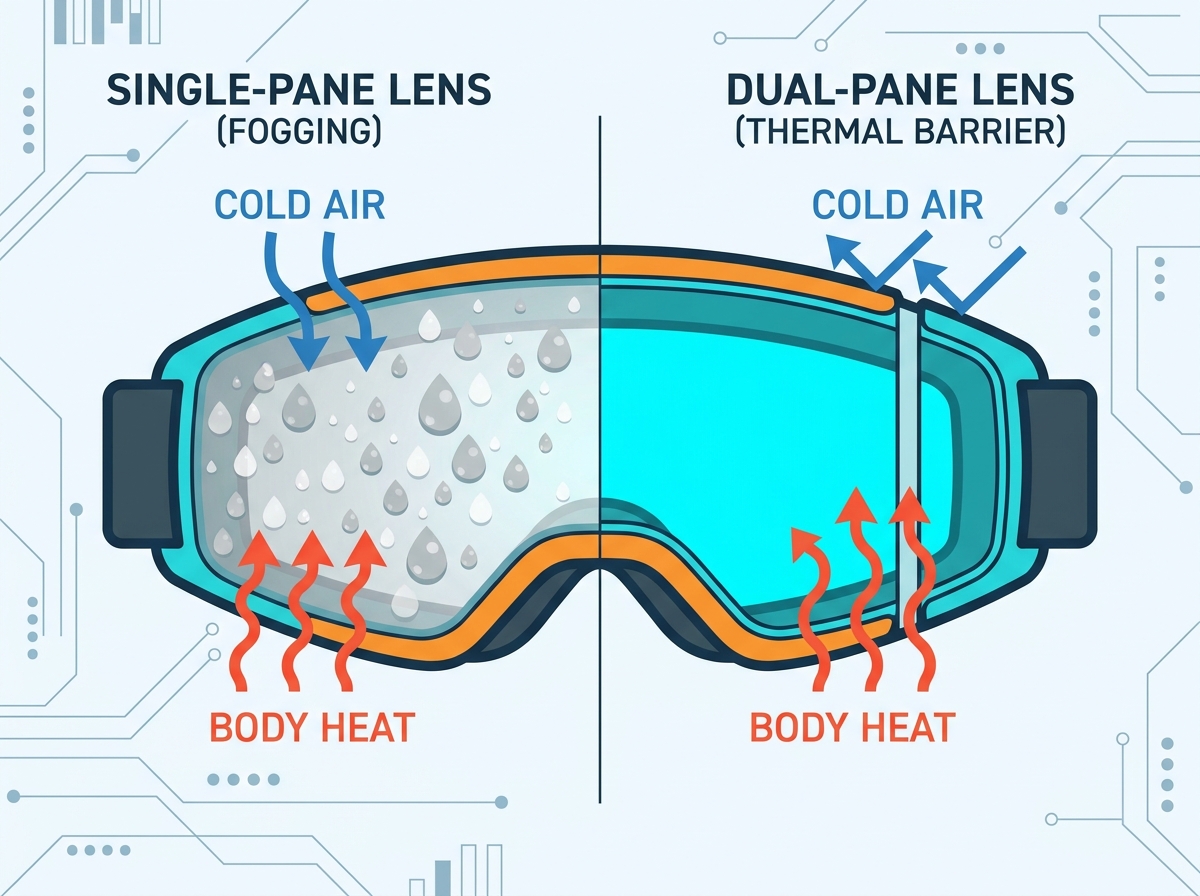
Understanding the core science behind lens condensation helps you fight it properly. Why do lenses turn opaque in the middle of a tough ride? We must examine the severe temperature delta happening right in front of your eyes. Your face acts like a furnace during intense physical exertion. It generates massive amounts of radiant heat and perspiration. When this hot, moisture-heavy air rises, it strikes the inner surface of the polycarbonate lens. If the outside ambient air is cold, the lens surface drops below the dew point of the trapped air inside the frame. Consequently, the water vapor rapidly cools and transforms into thousands of microscopic water droplets. These droplets scatter incoming light, which ruins your visibility.
This entire physical process relies heavily on airflow dependency. You will notice that dirt bike goggles fogging usually peaks during low-speed, high-exertion sections. Hard enduro riding requires massive physical effort as you lift the heavy bike, slip the clutch, and navigate brutal rock gardens. You generate extreme body heat. Yet, you move far too slowly to force fresh, cooling air through the frame vents. Contrast this scenario against high-speed motocross tracks. Fast movement pushes massive volumes of dry air through the frame, sweeping moisture away before it condenses.
We must establish the realistic baseline limitations of standard gear. Standard single-pane lenses offer terrible thermal insulation. They transfer cold temperatures straight from the outside environment to the inside surface. In high-moisture environments, a basic single-pane lens will always reach its saturation limit and fail. Setting accurate expectations helps you prepare better. If you ride slow, technical trails in cold or wet weather, standard lenses simply cannot process the heavy moisture load fast enough.
We must explore permanent hardware solutions to solve this visibility crisis permanently. Upgrading your core lens technology makes the most substantial difference. When shopping for anti fog motocross goggles, dual-pane lenses stand out as the ultimate upgrade. They act as a highly effective thermal barrier. They function exactly like the double-glazed windows installed in modern homes. Manufacturers seal a thin layer of insulating gas or air between two separate polycarbonate lenses. This trapped air prevents the cold outside temperatures from chilling the inner lens. Because the inner lens remains closer to your body temperature, hot sweat never touches a freezing surface, preventing the dew point from being reached.
When making this hardware decision, you must weigh the pros and cons. You face a higher upfront cost for dual-pane replacements. You might also notice a very slight optical distortion due to the extra layer of material. However, they deliver unmatched, long-term fog-prevention outcomes that single lenses simply cannot replicate.
Factory lens coatings offer another critical hardware layer. Premium lenses come equipped with hydrophilic coatings applied during manufacturing. Hydrophilic means "water-loving." These complex chemical coatings absorb moisture directly into their chemical matrix. They force the water molecules to spread evenly across the surface into a transparent microscopic film, rather than forming distinct, opaque droplets.
However, these factory treatments carry significant implementation risks. They inevitably degrade over time from sweat acidity and UV exposure. Furthermore, improper cleaning ruins them instantly. You should never wipe a wet factory-coated inner lens. The coating becomes soft when saturated, and a microfiber cloth will smear or strip it away entirely. Always dab the lens dry gently.
Knowing exactly when to upgrade is crucial. Do not waste time or money treating ruined gear. You must evaluate your current equipment regularly. Look for degraded frame foam that no longer seals against your face. Check for deep scratches on the inner lens, as scratches provide anchor points for condensation. If your primary riding environment shifts from dry desert tracks to cold, wet enduro forests, you need a full hardware replacement immediately.
Even the best dual-pane lenses still require substantial airflow to function perfectly. motocross goggles ventilation plays a massive role in moisture management. The helmet-to-goggle interface dictates exactly how much hot air escapes from your face. The brow of your helmet can easily compress the top ventilation foam of the frame. When the helmet sits too low or the frame is too tall, this physical compression blocks the exhaust ports. It traps hot exhaust heat directly inside the frame chamber.
You must test this fit seal and airflow channel compatibility before purchasing new gear.
Wear your actual riding helmet when trying on new frames.
Position the strap securely to mimic real riding tension.
Check the upper brow gap to ensure the top vents remain uncompressed and open.
Verify that the helmet breath box does not push the lower frame up into your eyes.
Many advanced riders try specific foam modifications. These are common pro hacks used in extreme enduro. You strategically remove thin sections of the top or bottom vent foam using a razor blade. This drastic modification significantly increases air intake and exhaust capability during slow, strenuous rides.
However, you must balance this increased ventilation against severe risk considerations. Increased airflow directly invites dust, sand, or mud intrusion into the eye chamber. You should only modify your foam if you exclusively ride in wet, mud-heavy environments where airborne dust is non-existent.
Breath deflectors help immensely during cold-weather riding. These attach to the bottom of the frame or the helmet mouthpiece. They actively route your warm exhaust breath downward and away from the bottom vents. By physically blocking mouth and nose exhaust from rising into the frame, deflectors drastically reduce the baseline moisture load.
Ventilation Strategy | Airflow Intake | Fog Resistance Impact | Debris Intrusion Risk |
|---|---|---|---|
Standard Factory Foam | Moderate | Baseline Performance | Very Low |
Modified (Foam Removed) | Extremely High | Superior in Slow Terrain | Very High (Dust/Sand) |
Breath Deflector Mask | Unchanged | Excellent in Cold Weather | Low |
OTG Extended Frames | High (Larger Volume) | Good for Prescription Users | Low |
When hardware upgrades fall short or you need a quick trackside fix, chemical treatments provide excellent reinforcement. We must break down how aftermarket anti-fog sprays lower the surface tension of water droplets. Unlike hydrophilic factory coatings that absorb water, these topical solutions alter the physical behavior of moisture. They lower the surface tension, forcing microscopic condensation droplets to sheet out into a perfectly flat, transparent layer. You see right through this flat water layer instead of staring at millions of tiny, light-scattering beads.
You need smart shortlisting logic when evaluating topical solutions. You can choose liquid sprays, dry wipes, and heavy-duty chemical pastes.
Liquid Sprays: They apply extremely quickly but tend to wash away fast when you sweat heavily.
Chemical Pastes: They take much longer to apply and buff out, but they offer serious, all-day longevity.
Dry Wipes: They pack easily in your gear bag and are perfect for fast trackside emergencies between motos.
You must follow a strict, step-by-step application protocol to ensure maximum efficacy. Skipping steps guarantees failure.
Clean the inner lens thoroughly using mild soap and lukewarm water to remove skin oils.
Dry the surface completely with a clean, lint-free microfiber cloth.
Apply the chosen chemical treatment evenly across the entire inner surface.
Let the solution sit for the manufacturer-recommended time to bond with the plastic.
Buff the surface gently in circular motions until crystal clear, avoiding heavy downward pressure.
You must remain vigilant about chemical degradation risks. Harsh chemicals heavily degrade or completely strip mirrored, tinted, or polarized finishes. Always prioritize manufacturer compliance. Read the warning labels carefully before spraying any aggressive chemical onto expensive optical plastics.
The internet is full of terrible advice regarding off-road vision. We must debunk common fogging myths to protect your expensive Dirt Bike Goggles from permanent damage. First, address the shortfalls of household hacks. People constantly recommend rubbing dish soap or shaving cream on the inner lens. These household products leave a thick, greasy residue buildup. While they might prevent fog for a few minutes, the consequences are disastrous. When your body heats up and you sweat, this chemical residue mixes with the moisture and drips directly into your eyes. It causes severe burning irritation, forcing you to pull off the track immediately.
You must also avoid abrasive wiping at all costs. Riders often panic when their vision goes white mid-ride. They pull off a glove and aggressively wipe the fogged lens with muddy fingers. Dirt and sand possess a higher Mohs hardness rating than polycarbonate plastic. Wiping creates thousands of deep micro-scratches across the surface. Not only does this ruin your optical clarity, but it gives future condensation vastly more surface area to cling to. You effectively guarantee worse fogging for the rest of the lens's lifespan.
Finally, stop spitting in your frame. The spit method is a classic scuba-diving trick. Divers use saliva to prevent masks from fogging underwater. However, we must debunk this method as highly ineffective and unsanitary for high-heat dirt biking. Motocross generates extreme ambient temperatures inside the frame. The saliva evaporates rapidly, leaving behind a blurry, unhygienic film of biological residue. Stick to engineered chemical solutions instead of biological fluids.
The best defense against compromised visibility remains a structured, tiered approach. Relying on a single trick rarely works in dynamic outdoor environments. You must combine dual-pane hardware, optimized ventilation strategies, and proper chemical maintenance to achieve true clarity. No single piece of equipment can out-perform excessive, unmanaged moisture in zero-airflow scenarios. You need excellent helmet compatibility to support high-end lenses.
Your next step is to audit your current equipment thoroughly. Inspect the foam integrity around the perimeter of the frame to ensure it seals against your cheeks. Hold your inner lens up to a bright light and check for micro-scratches or peeling factory coatings. Based on this audit, determine if you simply need a chemical stopgap for the weekend or a full hardware replacement for the season. Take proactive action before your next ride. Securing clear, fog-free vision ultimately keeps you safer, faster, and more confident on the toughest trails.
A: Yes, they can cause very slight visual distortion. The small air gap trapped between the two polycarbonate lenses changes the overall refraction index. This creates a minor optical shift compared to looking through a standard single pane. However, most riders adjust to this difference within minutes. The massive safety benefit of zero fogging far outweighs this negligible distortion.
A: Factory coatings usually last between one to three riding seasons. The timeline depends heavily on your riding frequency and washing habits. If you ride every weekend in heavy mud and aggressively wipe the inner lens, the coating will degrade in just a few months. Gentle dab-drying extends its lifespan significantly.
A: You must use Over-The-Glasses (OTG) frames. OTG frames feature deeper interior chambers and specific side cutouts to improve airflow around spectacles. Furthermore, you need to apply specialized anti-fog chemical treatments directly to your prescription glass lenses. Improved airflow and treated spectacles work together to stop inner condensation.
A: It depends entirely on your specific riding environment. If you ride hard enduro in wet, muddy forests, removing foam works beautifully because mud does not float. If you ride in dry, desert conditions, removing foam is a terrible idea. Fine dust and sand will bypass the vents and blind you instantly.


